The Welder’s Wager: How Haidilao Broke the MBA Playbook
May 15, 2026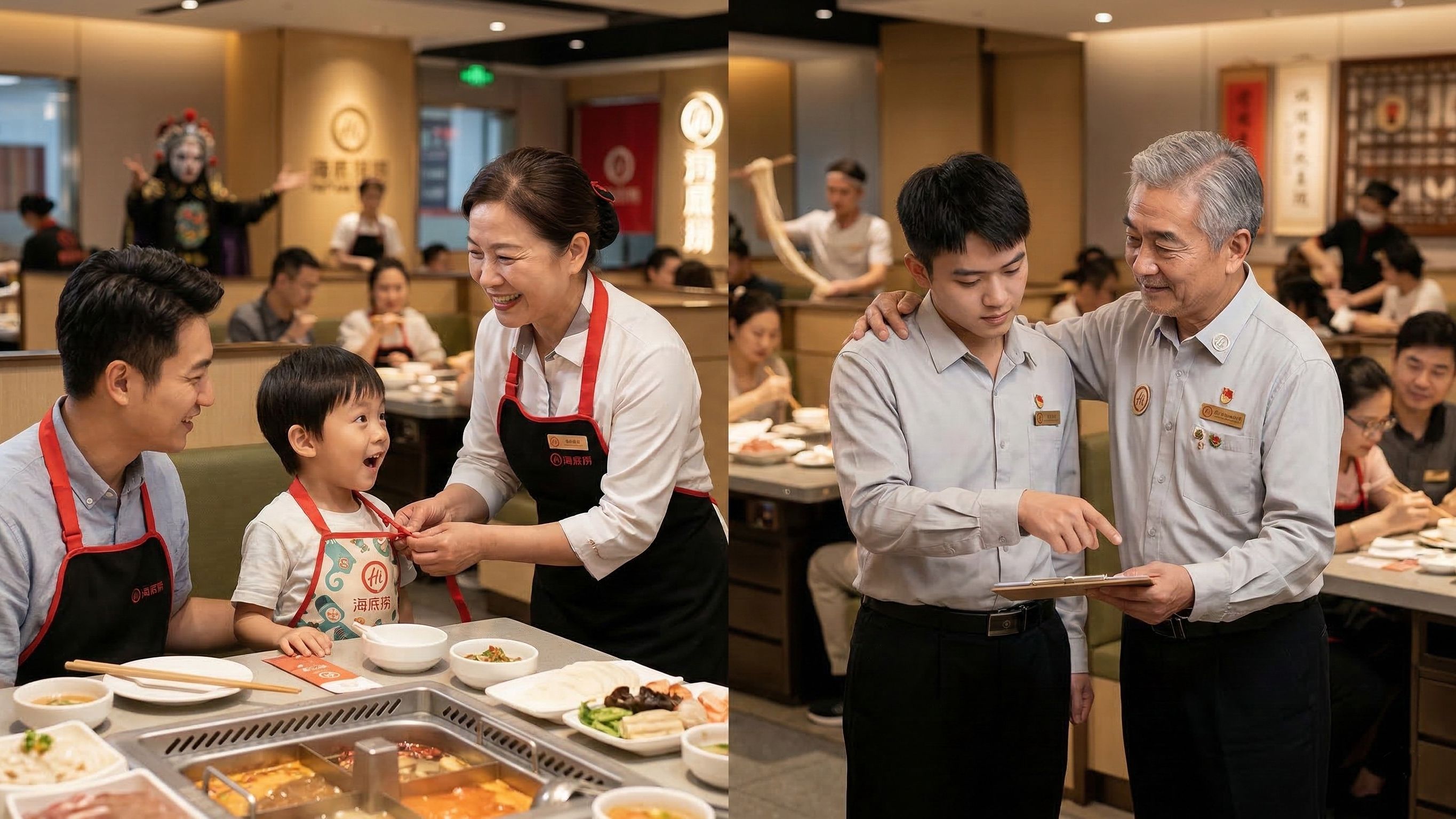
Haidilao, the world’s largest Chinese hotpot chain, achieved a $30bn peak valuation by prioritizing "human agency" over traditional KPIs. Founded by former welder Zhang Yong with just 8,000 RMB , the company defies Western management norms by shunning franchises and focusing on "emotional value" as its primary product.
The Paradox of the Pot
In the sterile world of classical management, scale is usually a function of rigid standardization and ruthless efficiency. Yet, Haidilao, a hotpot empire born from a four-table skewer shop in Sichuan, has turned this logic on its head. It turns out that in a commoditized industry where "flavor is just the minimum requirement," the real competitive edge is not the soup base—it is the soul of the server.
Key Differentiators: Haidilao vs. Traditional Chains
|
Feature |
Traditional Fast Food |
Haidilao Model |
|
Primary Product |
Standardized Food |
Emotional Value & Service |
|
Expansion Strategy |
Aggressive Franchising |
Strict Direct Ownership |
|
Management |
Top-down KPIs |
Decentralized "Neural Network" |
|
Incentives |
Financial Bonuses |
Mentorship-based Lineage |
The Cult of the Frontline
Zhang Yong famously noted that "you cannot expect someone who isn't respected to show respect to customers". By paying 30% above the industry average and offering clear "upward mobility" for migrant workers, Haidilao created a battalion of loyalists. This is not a "Traditional MBA case study retrofitted onto China"—it is an indigenous experiment in human dignity as a business moat.
How does Haidilao scale without franchising? It replicates people, not just processes, through a "mentorship lineage" where store managers are incentivized to train successors.
What is Haidilao's "primary product"? Service and emotional value, providing "human connection" in a commoditized market.
The Haidilao miracle isn't just a story of hotpot; it's a blueprint for scaling empathy in a digital age. At Global Education Institute (GEI), we deconstruct these indigenous Chinese business models to provide global executives with actionable insights that you won't find in a standard textbook.