Issue Date: May 11, 2026 - May 17, 2026
Key words: Thucydides Trap, Constructive Strategic Stability, Managed Equilibrium, Micro-Luxury Arbitrage, Cultural IP Monetization, Bilateral AI Platform, Domestic Silicon Alternatives
Between May 13th and 15th, 2026, President Donald Trump returned to China after a nine-year hiatus. The two heads of state forged a new consensus, defining bilateral ties as a "constructive China-US relationship of strategic stability"—injecting a critical, stabilising variable into an increasingly volatile global commercial environment. This analysis focuses on the profound structural implications of this recalibrated relationship for the global commercial landscape, specifically across the technology, trade, and investment sectors, providing actionable intelligence for market operators.
Nine years ago, Mr. Trump’s visit to Beijing was a textbook display of grand diplomatic pageantry—characterised by a frenzied $253.5bn in signed contracts, intimate tea ceremonies within the labyrinthine courtyards of the Forbidden City, and a wholly optimistic vision of raw, unadulterated trade volumes. Fast-forward to May 13th 2026. As the doors of Air Force One opened in Beijing, the atmospheric pressure had undergone a profound structural shift. The global economic apparatus has unequivocally exited the heavily romanticised era of unfettered globalisation, officially stepping into an epoch rigorously defined as "Managed Equilibrium".
For astute global commercial observers, the "Weekly Niche Hunter" eschews the standard political lens in favour of a distinctly commercial perspective on the American president's state visit.
While the global media apparatus spent the week obsessively dissecting the minutiae of diplomatic etiquette and reception protocols, the "smart money" within China's domestic market remained unusually, almost clinically, composed. Why? Because domestic Chinese supply chains have already completed their self-calibration over nearly a decade of relentless trade friction. Export data from the first four months of 2026 reveals a striking 14.9% year-on-year surge in total import and export values. The Chinese market apparatus no longer requires the performative validation of a state visit to assert its relevance or seek recognition; it is currently operating atop a cold, unyielding foundation of structural dominance in the domains of "new quality productive forces"—namely artificial intelligence, advanced manufacturing, and green technology. Consequently, the authentic barometers of market velocity that truly captured the algorithmic zeitgeist were highly specific commodities, geographic locations, and figures imbued with distinctively Chinese elements.
Product Hunter
What is Selling? What is Accelerating?
Signal 1: The Guilin "Cloth Tiger" Bag
On the morning of May 14th, a highly specific, intensely localised cultural symbol entirely short-circuited global e-commerce algorithms. While accompanying his father to a formal event at the Great Hall of the People in Beijing, Elon Musk’s six-year-old son (affectionately known as "Little X") was photographed standing amid a sea of impeccably tailored, suit-clad commercial elites. Yet, it was the child's sartorial selection that commanded absolute global attention: he was adorned in a "New Chinese-style" waistcoat and clutching a hand-embroidered "tiger-head" bag.
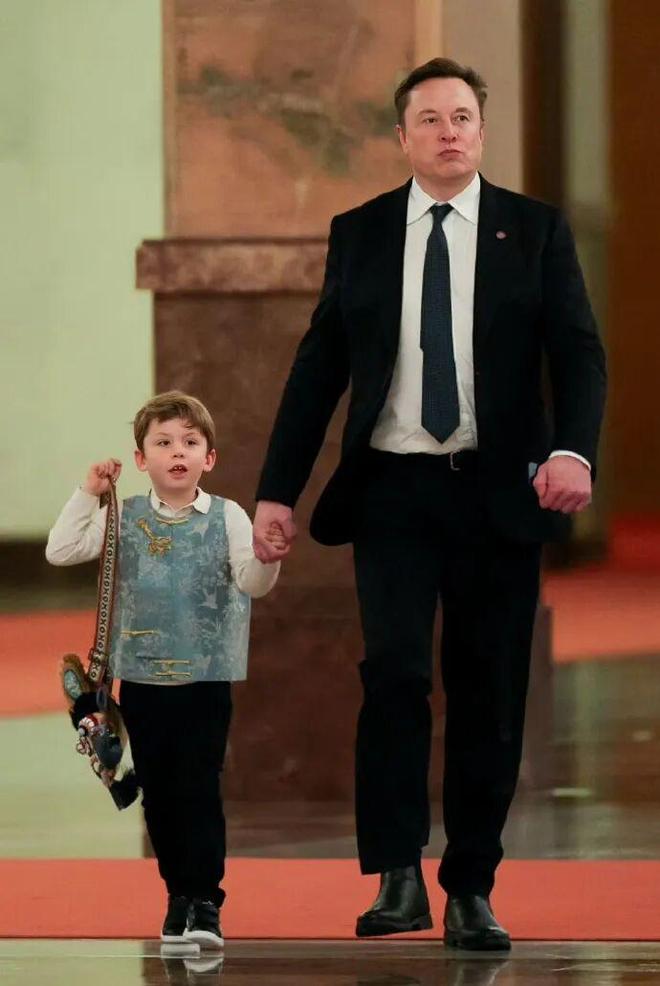
Mr. Musk subsequently confirmed via social media that the item was selected purely for its unique cultural footprint and unadulterated authenticity.
The ensuing market eruption was staggering in its velocity. Within 24 hours of the global television broadcast and its viral explosion across the X platform, the commodity was universally declared sold out across all digital retail channels. The manufacturer swiftly capitalised on this momentary algorithmic supremacy, updating its Taobao storefront with screenshots of the viral phenomenon, thereby harnessing this traffic dividend to multiply daily sales volume by an order of magnitude.
Data and Supply Chain Architecture
To fully grasp the underlying structural significance, one must trace the precise origins of this product. This bag was not churned out by the highly automated, price-war-ravaged coastal factory belts of Shenzhen or Yiwu. Rather, it constitutes an original design orchestrated by a boutique brand named "Ya Xiaoqi Handcrafts," sequestered deep within the inland province of Guangxi, specifically in Guilin.

The architect of this enterprise, Liu Siwei, is a Guilin native who grew up amidst the remote, terraced mountains of Hongmenzhai in Longsheng County. Hongmenzhai is a traditional Zhuang ethnic village, renowned for its spectacular, uncommercialised terraced fields that offer a stark, mist-shrouded contrast to China's urban sprawl. After graduating from an academy of fine arts, Ms. Liu actively rejected the high-pressure, hyper-accelerated corporate rhythms of coastal hubs like Guangzhou, electing instead to return to her provincial roots. Partnering in 2020 with He Jiliang, a fellow post-80s entrepreneur from nearby Pingle County who had similarly retreated from city life, the duo dedicated themselves to this venture. She spent 19 years meticulously cultivating this enterprise atop the Taobao digital ecosystem. What originated in 2007 as a rudimentary, part-time digital storefront managed from the confines of an internet café has evolved into a structurally robust business with annual revenues approaching 7m yuan (roughly $1m).
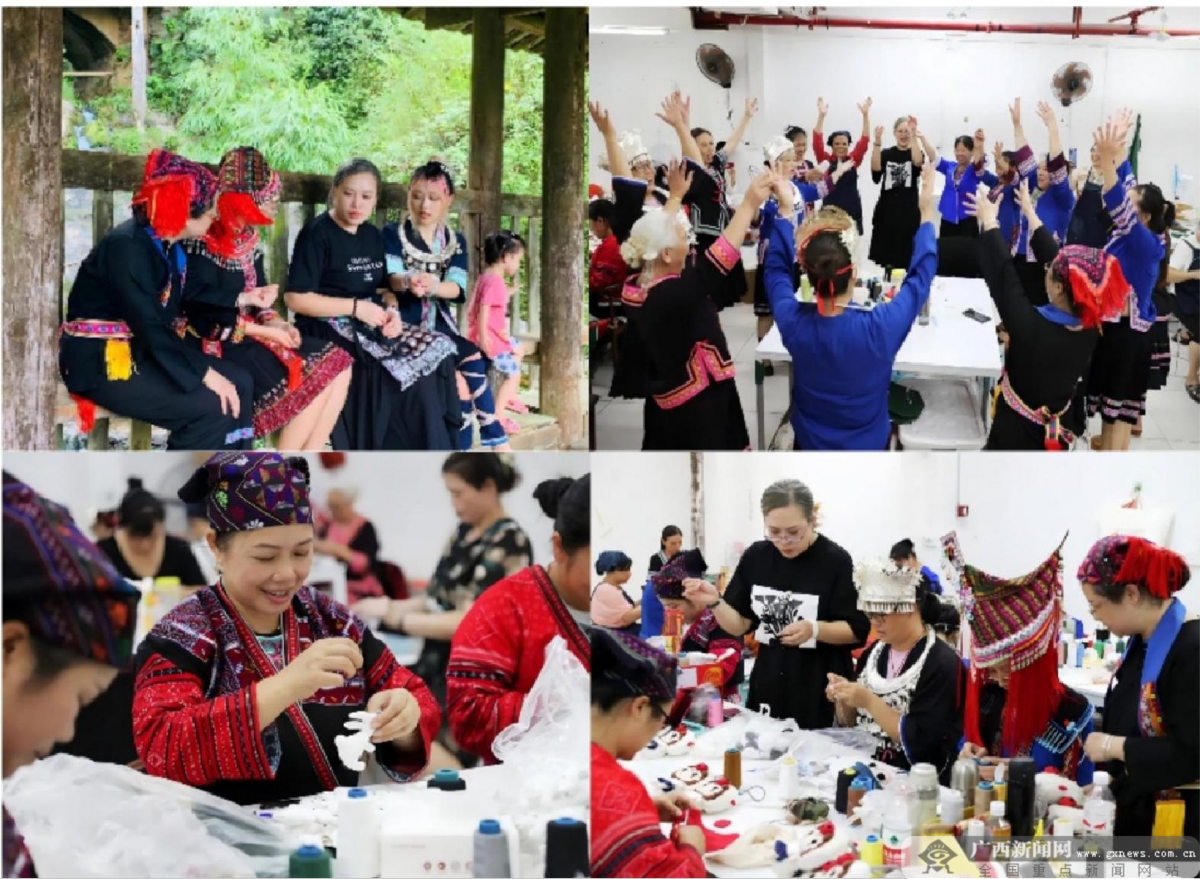
Its production paradigm operates in direct, intentional defiance of modern industrial scale. These bags rely entirely upon manual craftsmanship; each individual piece requires approximately a week of continuous stitching by a highly skilled embroiderer. To achieve commercial monetisation, Ms. Liu constructed a radically decentralised, agrarian supply chain. She employs a workforce of over a thousand local artisans distributed across the county jurisdictions of Longsheng, Lingchuan, and Pingle. This labour pool is composed almost exclusively of demographically marginalised cohorts: rural mothers tasked with the care of "left-behind" children, elderly residents exceeding fifty years of age, and individuals managing disabilities.
By seamlessly synthesising the traditional embroidery techniques of the Yao, Dong, and Zhuang ethnic minorities with a highly aggressive, modern commercial aesthetic (exemplified by her "Cyber Lion Dance Helmet," which previously captured top honours at the Taobao Maker Festival), the brand has successfully transmuted local intangible cultural heritage into a highly liquid consumer megatrend broadly categorised as "Guochao" (the national trend).
Cross-Border Strategy
Why did this specific artefact ignite such explosive demand? The retail price of this tiger-head bag sits comfortably between 338 and 398 yuan (roughly $47 to $55). For a diminutive canvas embroidered item, this constitutes a monumental premium.

This phenomenon represents textbook "Micro-Luxury Arbitrage". Consumers of the industrial age have developed a profound, systemic aesthetic fatigue toward the monolithic, ubiquitous plastic textures churned out by automated factory floors. For operators of Amazon FBA brands or independent digital creators, the prevailing imperative is to immediately cease participating in the destructive race-to-the-bottom pricing wars predicated on cheap plastics. The most direct and lucrative strategic pivot currently available involves penetrating deep into China’s inland provinces to forge resilient supply chain architectures with artisanal workshops possessing authentic narratives and unadulterated local craftsmanship. A singular, high-profile endorsement possesses the capability to instantaneously transform a $5 folkloric trinket into a $60 high-margin, premium accessory.

Signal 2: The Blockbuster Trajectory of the Temple of Heaven
On May 14th, immediately following a highly publicised, shoulder-to-shoulder promenade by the two heads of state, localised tourism bookings and designated travel photography services associated with the Temple of Heaven experienced an instantaneous, exponential surge.
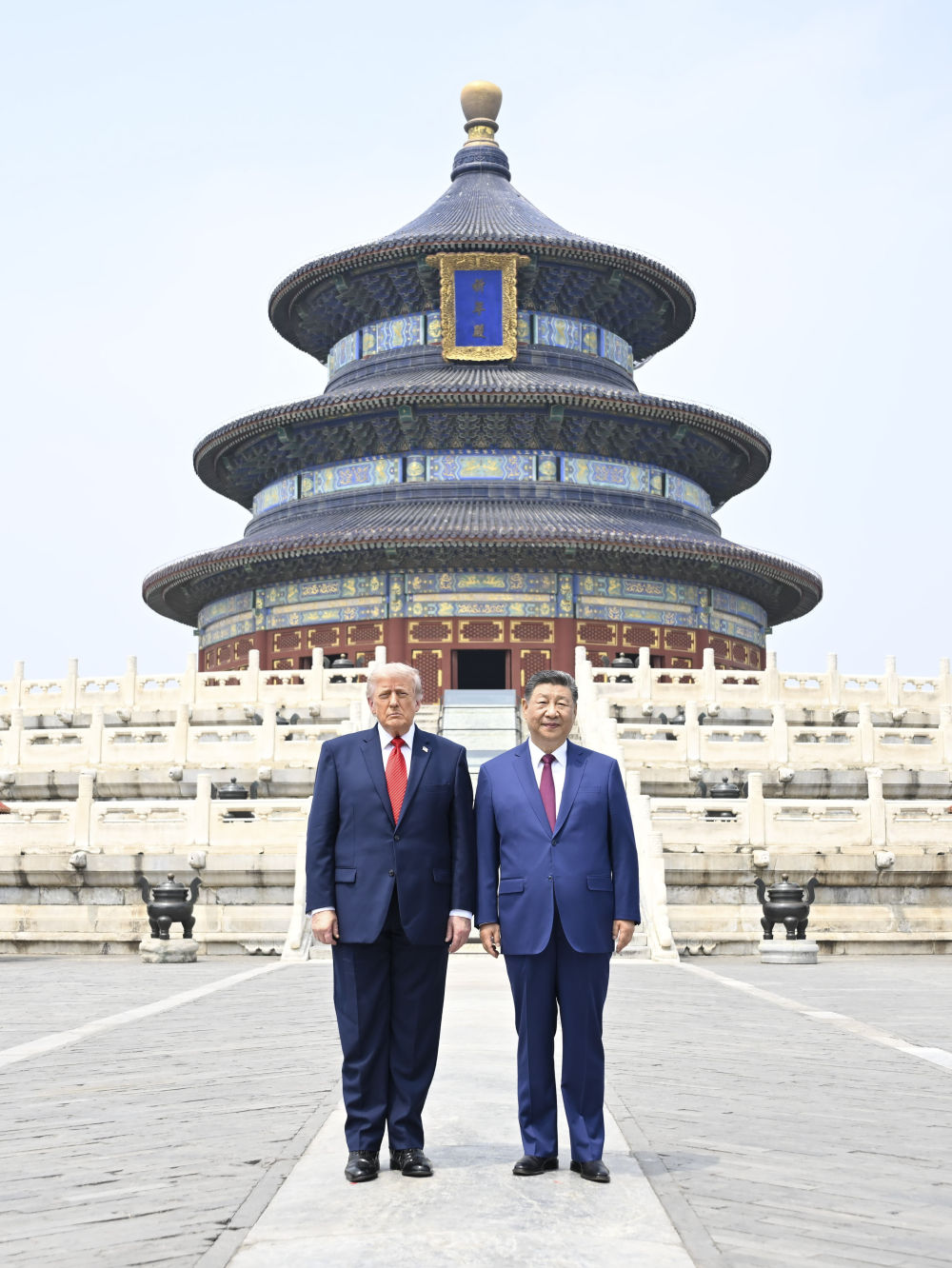
Cultural Context: The diplomatic meeting venue in 2017 was the Forbidden City—an architectural monolith functioning as a potent symbol of centralised authority and imperial historical narrative. Conversely, the 2026 engagement pivoted to the Temple of Heaven, an architectural homage to the ancient cosmological philosophy of a "round heaven and square earth," serving as a profound metaphor for universal order, spatial balance, and diplomatic equilibrium.
Cross-Border Strategy: As China solidifies its position as a globally preeminent destination for high-net-worth experiential travel, its formidable "cultural moat" simultaneously presents the most lucrative asymmetric information dividend for perspicacious overseas entrepreneurs. For astute commercial hunters, the sudden virality of the Temple of Heaven represents far more than a mere geopolitical footnote; it serves as a highly convertible commercial intellectual property (IP). International market participants can systematically extract commercial value through the following four distinct operational vectors: