The Franchise Illusion: Why China’s Hotpot King Chose Relentless Control Over Rapid Capital
Apr 14, 2026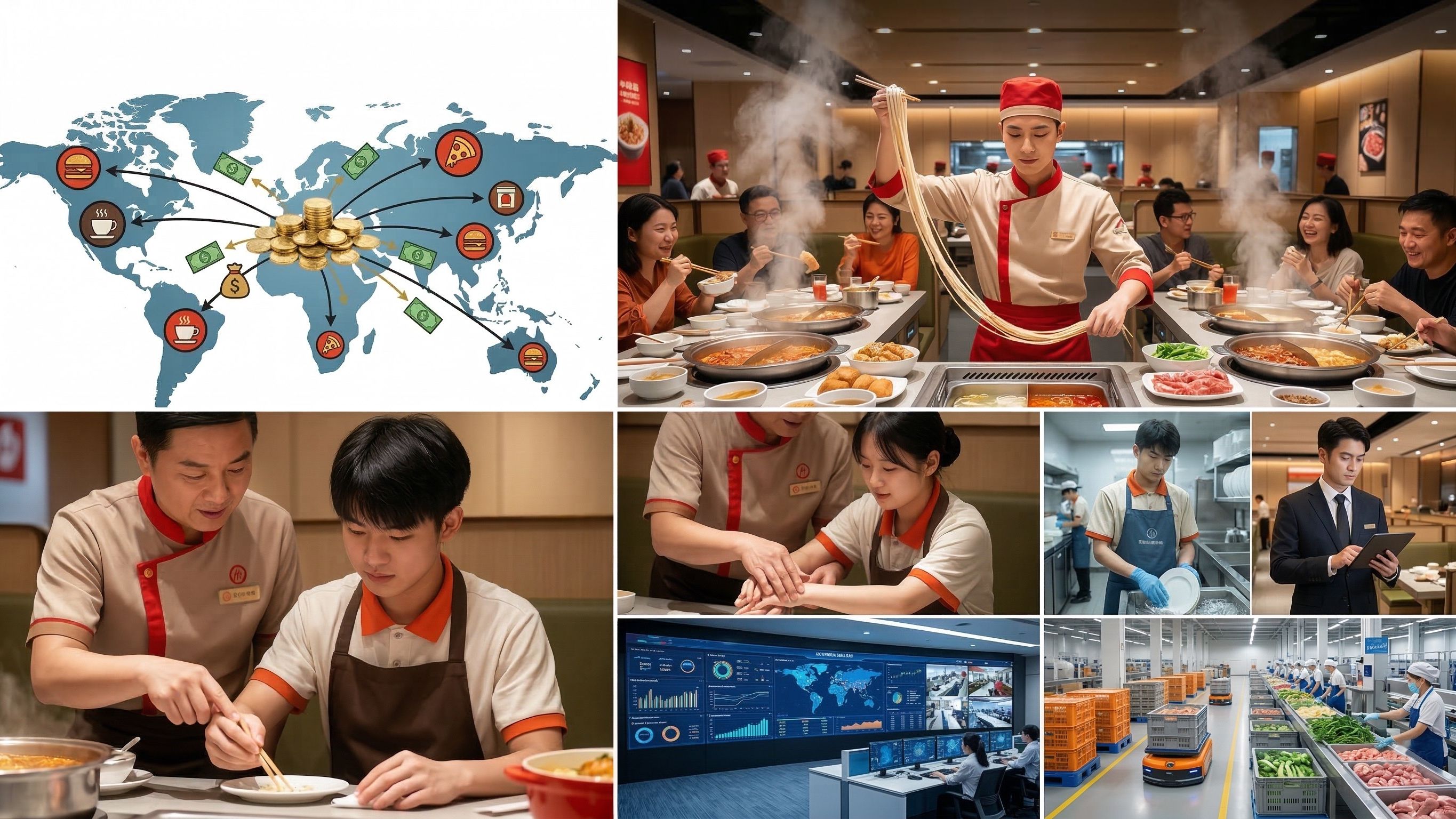
To the uninitiated observer, the global restaurant business is a game of franchising. From the golden arches of McDonald’s to the ubiquitous storefronts of Starbucks, the prevailing logic is simple: license the brand, leverage local capital, and scale with breakneck speed. Yet, the world’s most profitable Chinese dining empire has built a $30 billion valuation by doing exactly the opposite.
Haidilao, the undisputed king of Chinese hotpot, has surpassed 1,300 global locations without a single franchisee. In a market obsessed with blitzscaling, this refusal to franchise appears almost stubbornly archaic. However, a closer inspection reveals a masterclass in organizational resilience and systemic control.
The True Cost of Franchising
The fundamental flaw of the franchise model in high-touch service industries is the degradation of consistency. Franchising is essentially "brand licensing plus revenue sharing". While it offers an asset-light path to expansion, it sacrifices the very element that generates premium pricing: the customer experience.
For a business where the competitive moat is not the flavor of the broth, but the precision of the hospitality, delegating operations to third-party investors is akin to drinking poison to quench a thirst. Haidilao realized early on that culture cannot be licensed.
The Architecture of Relentless Control
Instead of replicating its brand through contracts, Haidilao replicates its people through a deeply embedded mentorship system. This tightly coupled operating system relies on several invisible pillars:
- Path Predictability: Store managers are not external hires; they are cultivated from the ground up. A dishwasher can become a store manager, creating a fractal-like growth system where future progression is highly visible and verifiable.
- Information Integrity: By managing every node—from site selection to supply chain logistics—headquarters maintains absolute data fidelity. If a store’s customer satisfaction dips, the central nervous system registers the shock immediately.
- The Invisible Engine: Beneath the restaurants lies ShuHai, a digitized supply chain platform that handles centralized food processing and decentralized logistics. It utilizes machine learning to forecast demand, ensuring that operational flexibility is anchored by industrial standardization.
Growth is not the goal; replicability is. By rejecting the franchise illusion, Haidilao maintained the operational coherence required to turn an unscalable variable—empathy—into a highly standardized corporate asset.
Ready to decode the operational frameworks of the world's fastest-growing enterprises? Explore our Executive Mini-MBAs at the Global Education Institute to translate the logic of modern Chinese innovation into actionable strategies for your organization.