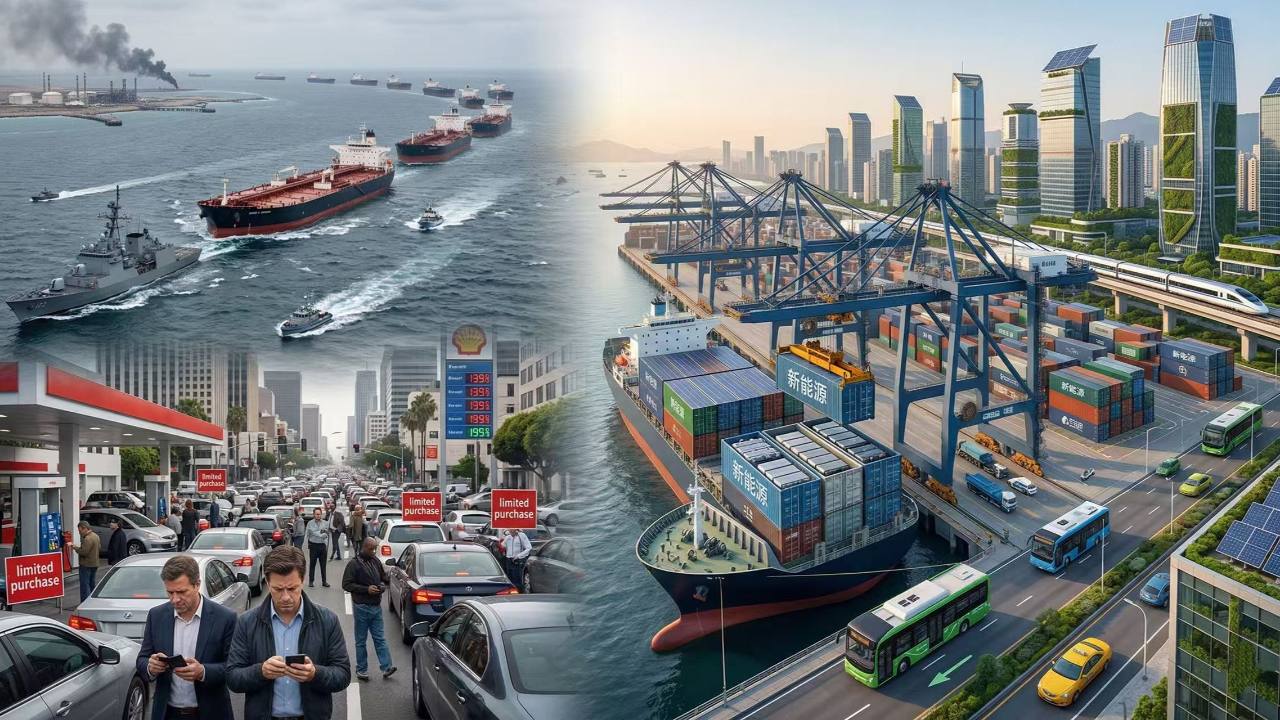
THE NICHE HUNTER ISSUE: Feb 23–Mar 1,2026
Is Another Oil Crisis Upon Us?
Issue Date: February 23, 2026 – March 1, 2026
Key words: 2026 Oil Shock, Strait of Hormuz, Stagflation, Imported Inflation, Just-In-Case, Just-In-Time, K-Shaped Physical-Paper Dislocation, Cost-Push Inflation, Safe-haven Assets, The Scarring Effect
The global economy spins on a delicate, almost invisible consensus: it must never stop. Capital flows ceaselessly, supply chains hum quietly in daily life, and cheap, abundant energy acts as the hidden lubricant allowing this modern civilisation to run at an unprecedented scale. The entire global commercial paradigm—from the micro-transactions of independent online sellers to the massive server clusters underpinning enterprise software-as-a-service (SaaS)—has been built upon the fundamental assumption that these wheels will never cease turning. But what happens when the system's main artery is suddenly severed?
From late February 2026, markets gradually began pricing in the risk premium of an escalating Middle Eastern conflict, yet the true "violent awakening" did not strike until early March. As shipping through the Strait of Hormuz ground to a near halt, Brent crude spiked in a short, impulsive burst, executing a textbook price re-rating driven by a supply shock.
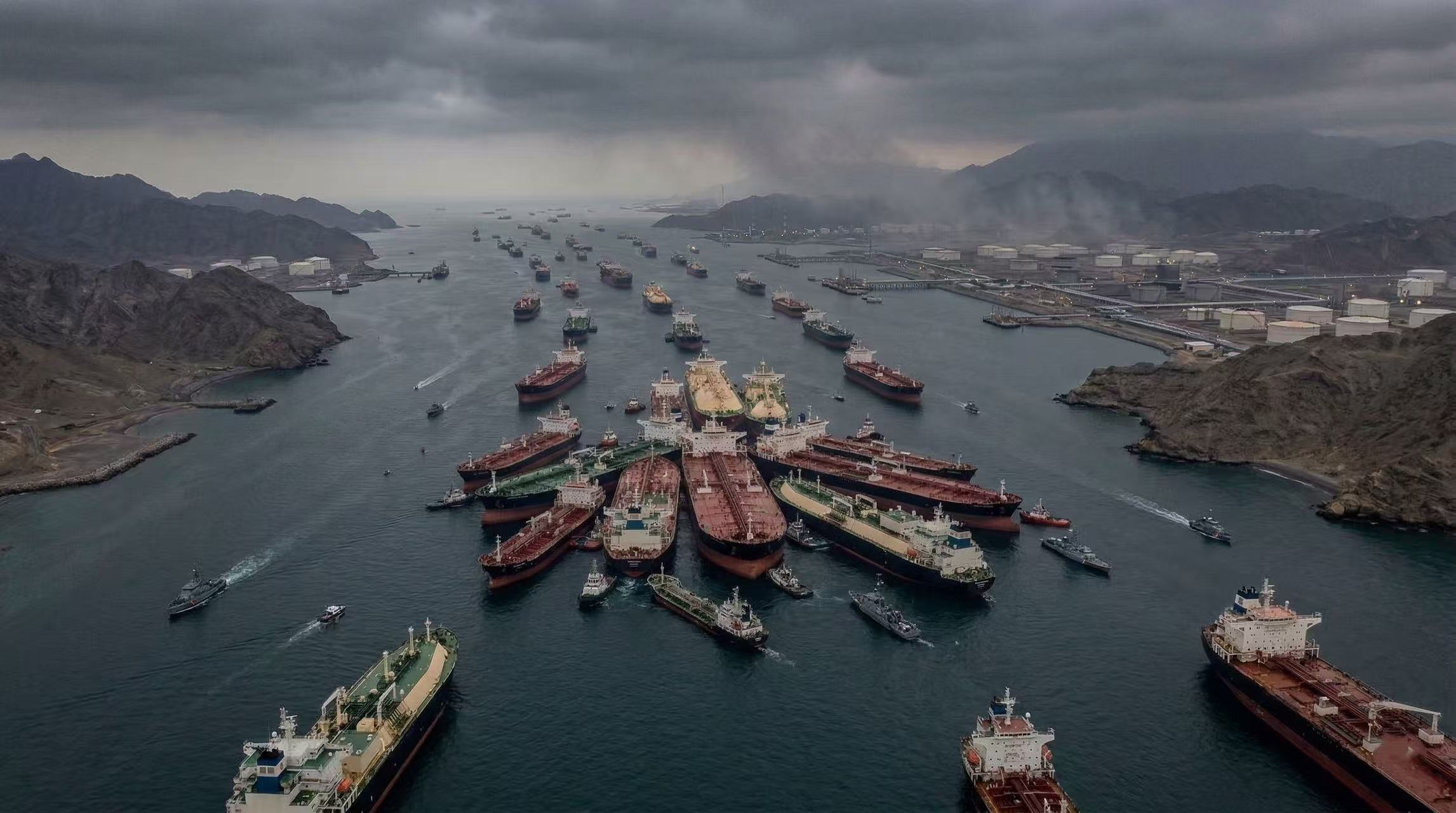
The essence of the current crisis lies in a severe functional breakdown of the Strait of Hormuz, a maritime chokepoint upon which roughly 20% of global oil transit relies. Although physical supply has not been entirely severed, the confluence of logistical bottlenecks and risk premiums has forced the market to price in extreme scenarios—in the worst case, a potential supply shock reaching millions of barrels per day. This mechanism of expectations front-running reality is the true driver behind the current bout of extreme oil-price volatility.
To understand this, the dramatic veneer of geopolitics must be stripped away. State actors, borders, and ideological clashes warrant no discussion here. Viewed purely through the lens of economics, commercial viability, and human psychology, an extreme supply-side shock serves as a masterclass in systemic fragility. Oil is far more than mere fuel; it is the foundational bedrock of the modern industrial ecosystem. It is the feedstock for plastics, the basis of agricultural fertilisers, and the vital motive force required to propel every manufactured good across oceans and continents.
When a highly globalised economy—optimised for absolute efficiency rather than resilience—faces a sudden, gaping shortfall in a core physical input, the system loses its elasticity almost instantly. Historically, the 1973 oil shock involved a reduction of merely 5% in global supply, yet this was enough to quadruple prices from $3 to $12 a barrel. In 1979, global supply fell by a mere 4%, causing prices to more than double. This multiplier effect is uncompromising. As energy prices soar, the cost of producing basic materials such as aluminium and copper—which require colossal electrical inputs—surges in tandem. For the digital economy, this transmission is equally ruthless. Data centres are the backbone of SaaS and the creator economy, and they devour electricity on a mammoth scale. A sustained energy shock directly inflates the infrastructure costs of cloud computing, forcing technology providers either to absorb staggering losses or to pass the costs downstream.
Furthermore, the modern economy exhibits a chilling rigidity in short-term demand. Factories cannot instantly switch to alternative power; logistics fleets cannot overnight phase out diesel lorries; consumers still need to commute and heat homes. When this ossified, uncompromising demand collides head-on with vertically plunging supply, the market breeds a colossal "panic premium".
This report serves as an authoritative guide to navigating the extreme rupture and reshaping of global supply chains now unfolding. For those building enterprises, allocating capital, or creating digital value, it must be recognised that the rules of gravity have temporarily changed. The following are the rules for surviving the upheaval.
The Lexicon
To accurately describe the structural shifts convulsing global markets, commercial operators and investors must adopt a highly specific vocabulary. These terms capture the essence of the current crisis and furnish the conceptual framework necessary for drafting strategic corporate defences.
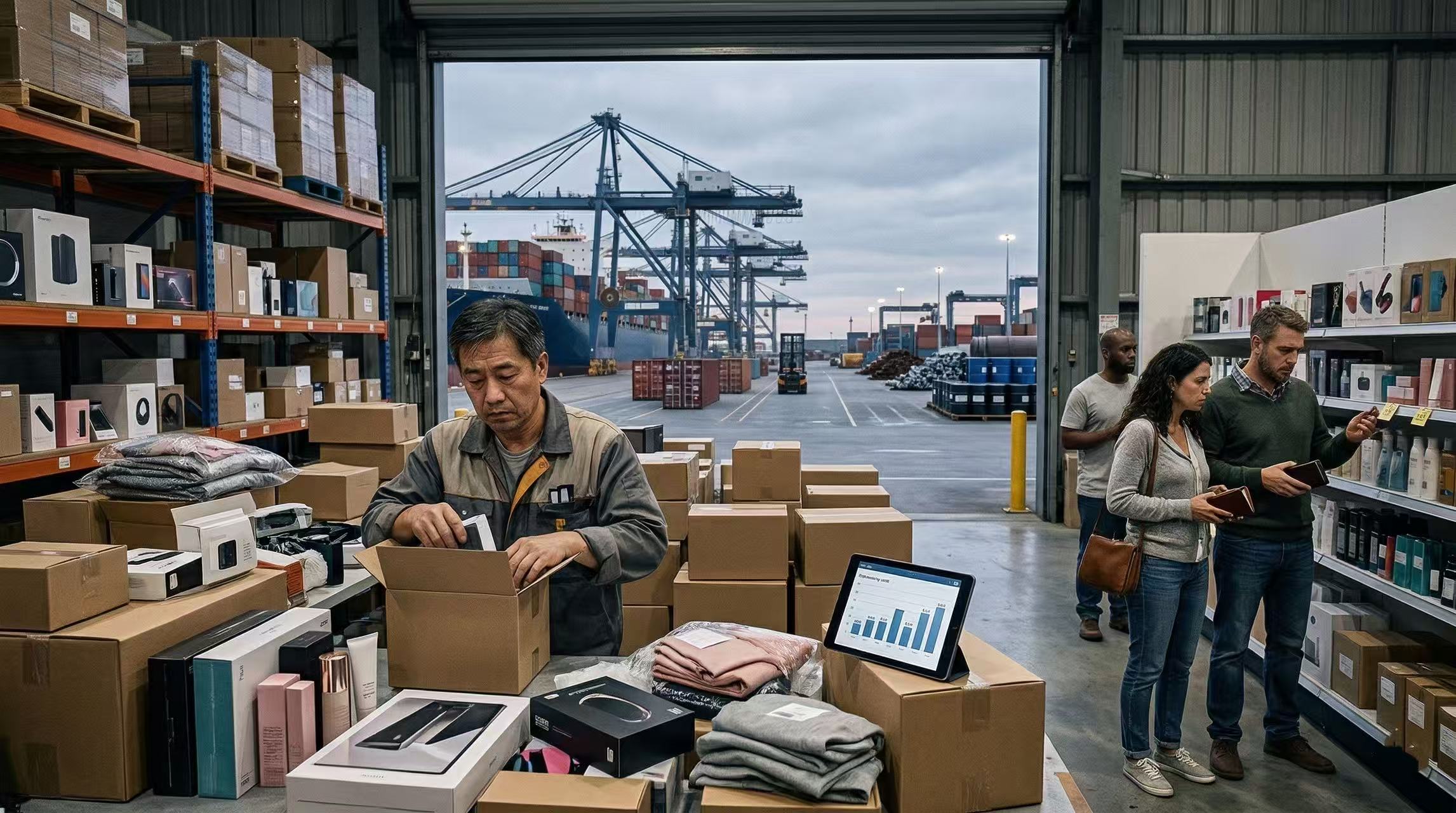
Cost-Push Inflation: This differs from the traditional, demand-pull inflation sparked by an overheating economy or rampant money printing. Cost-push inflation is a macroeconomic nightmare wherein the overall price level rises purely due to escalating raw material and logistics expenses. In this scenario, inflation is "imported" through the supply chain. It ruthlessly devours corporate profit margins, as firms are forced to spend more to produce the exact same goods, only to then pass these costs onto consumers whose purchasing power is already eroding. It is the silent killer of cross-border e-commerce and retail sectors.
The K-Shaped Physical-Paper Dislocation: This is a structural market fracture that occurs during severe commodity shortages. In early 2026, the paper futures market priced oil for future delivery at around $100, assuming the crisis would eventually be resolved. Yet in the physical market—where actual crude is traded and delivered—prices exploded to $140 a barrel. Institutional behemoths and large corporations can hedge their exposure in the financial futures market, locking in a lower theoretical price. Meanwhile, small and medium-sized enterprises (SMEs), independent logistics operators, and ordinary retail consumers bear the full, devastating brunt of exorbitant spot prices in the physical market.

Agentic Efficiency Hedging: The strategic deployment of artificial intelligence and advanced automation—specifically "agentic workflows"—to aggressively slash operational, labour, and energy inputs. In a world where physical commodities are exorbitantly expensive, companies at the technological frontier use AI as a counterweight. By mathematically optimising delivery routes, automating customer service, and minimising server loads, firms decouple their margins from the volatility of underlying physical energy. It is the ultimate modern moat.

Just-In-Case (JIC) Architecture: This marks a profound philosophical and operational reversal in supply chain management, pivoting away from the hyper-lean, zero-inventory "Just-In-Time" (JIT) model toward a strategy that prioritises deep inventory buffers. JIC acknowledges that global supply chains are fundamentally fragile and can seize up without warning. It sacrifices balance-sheet efficiency—tying up capital in warehouse space and stock—to buy insurance against global volatility, emphasising supplier redundancy and localised manufacturing to survive acute shocks.
The Scarring Effect: The enduring psychological and behavioural shifts in consumer and corporate mindsets following an acute economic crisis. It is characterised by the sudden death of economic optimism. When the public realises that perpetual growth is not a given and physical resources are finite, they pivot toward defensive saving, aggressive cash hoarding, and structural trading-down in consumption. This will profoundly alter customer lifetime value (LTV) and customer acquisition costs (CAC) in the eyes of digital marketers.
Capital Hunter
For macro investors, secondary market allocators, and corporate treasurers managing startup runways, an energy-driven supply shock is the most treacherous minefield in the macroeconomic landscape. It forms a bridge linking physical logistics with capital market valuations, awakening the historical spectre of "stagflation"—the toxic and paralysing combination of stagnant economic growth and virulent inflation.
The Monetary Policy "Death Trap"
During a standard, demand-driven economic boom, central banks possess a clear playbook: raise interest rates to cool the economy, constrain borrowing, and depress prices. But in a pure supply-side shock, monetary policy becomes an absolute "death trap". The Federal Reserve and the European Central Bank cannot print more crude oil, nor can they magically unclog maritime chokepoints by tweaking the federal funds rate.
When inflation is driven by diesel costs that are 40% higher than a month ago, central bankers face an impossible task. Hiking rates to combat this imported inflation risks strangling whatever economic growth remains, plunging the economy into a deep and painful recession. Conversely, cutting rates to stimulate a stalling economy risks letting virulent inflation spiral entirely out of control, utterly destroying the currency's purchasing power.
Violent gyrations in energy markets swiftly alter market expectations for the trajectory of inflation. Although official inflation prints have yet to register significant shifts, market-based indicators of inflation expectations have ticked sharply upward, showing that investors are reassessing the lingering effects of the energy shock. The bond market reacted directly: US Treasury yields steepened notably in short order, with rates across multiple maturities leaping by double-digit basis points, reflecting the market's repricing for "higher and more persistent inflation". Historical experience dictates that in an environment of sustained inflationary pressure, the real returns on fixed-income assets are typically eroded—a dynamic brutally apparent during the stagflationary 1970s that challenges traditional asset allocation frameworks.
Equities: A Ruthless Sorting Mechanism
An energy shock does not merely depress the broader market; it aggressively and mercilessly reshuffles the deck. Equities endure a brutal period of "multiple compression". As the cost of capital ascends and risk-free rates climb, the future earnings of high-growth companies are fundamentally reassessed using a higher discount rate. The 1970s proved to be a "lost decade" for equities. While nominal returns were marginally positive, once adjusted for the rampant inflation of the era, the S&P 500 surrendered roughly 20% of its real purchasing power between 1973 and 1982.
In early 2026, a similarly violent sorting mechanism emerged, cleaving a stark divide between winners and losers in the public markets.
The Losers (High Energy Intensity and Consumer Discretionary): Transport and tourism face immediate devastation. Carriers like Delta and United Airlines reported severe margin compression, forced to watch helplessly as aviation fuel costs spiked by more than 30% in just six weeks. Although initial travel demand remained high, the capacity to pass these exponentially rising costs onto consumers swiftly hit its limit. Similarly, traditional retail and consumer-reliant platforms confront a dual threat: escalating inbound logistics costs paired with a consumer base whose disposable income is evaporating rapidly at the petrol pump. High-growth tech stocks lacking immediate cash flow have also been severely punished, as the market penalises any firm reliant on cheap capital to fund promises of future profits.
The Winners (Pricing Power and Efficiency Moats): As the energy shock came into the market's field of vision, capital rapidly initiated forward-looking pricing for "potential winners". Energy companies boasting resource exposure or pricing power were reappraised as critical assets for hedging against real-world shocks, with their share prices beginning to outperform the broader market. Concurrently, a more structural theme has crystallised: companies capable of driving profound efficiency gains through technology—particularly those deploying AI and automation to slash operational and energy costs—are increasingly viewed as "cost-hedging instruments". In an environment where input prices face relentless upward pressure, such firms are not entirely immune to macroeconomic constraints, but their ability to protect margins via enhanced efficiency grants them outsized appeal in asset allocation. While the market has yet to witness the full realisation of these advantages, the vector of pricing has decisively shifted.
Asset Class / Sector |
1970s Shock Performance (Historical Reference) |
2026 Trend |
Potential Core Mechanism |
Broad Equities (S&P 500) |
Real annualised return of -20%(1973-1982) |
Valuation de-rating, step-wise elevation in the VIX |
Sticky inflation drives up discount rates, compressing P/E multiples; lagging downstream cost pass-throughs result in margin squeezes. |
Energy & Upstream Resources |
Significantly outperformed the market (Extremely high Alpha) |
Reaching cyclical peaks, energy heavyweights hit all-time highs |
Driven dually by geopolitical premiums and tight supply; directly buoyed by backwardation as an inflation hedge. |
Aviation / Heavy Transport |
Severe margin squeeze |
Cost shocks materialise, consecutive downgrades in earnings forecasts |
Exposed to un-hedgeable, real-time energy costs; consumer demand withers in a stagflationary environment, reducing corporate pricing power to a freezing point. |
Fixed Income (Bonds) |
Real returns negative over the long term |
Yield curve inversion deepens, massive sell-offs at the long end |
Unanchored inflation expectations erode purchasing power; central banks forced into a "Higher for Longer" interest rate path, triggering capital losses. |
The Supercycle: Hard Currency and the Industrial Metals Gamble
When fiat currency haemorrhages purchasing power due to physical scarcity in the real world, capital flees toward tangible, historically reliable assets. The historical data concerning precious metals during energy shocks is staggering, and highly pertinent for capital allocators in 2026.
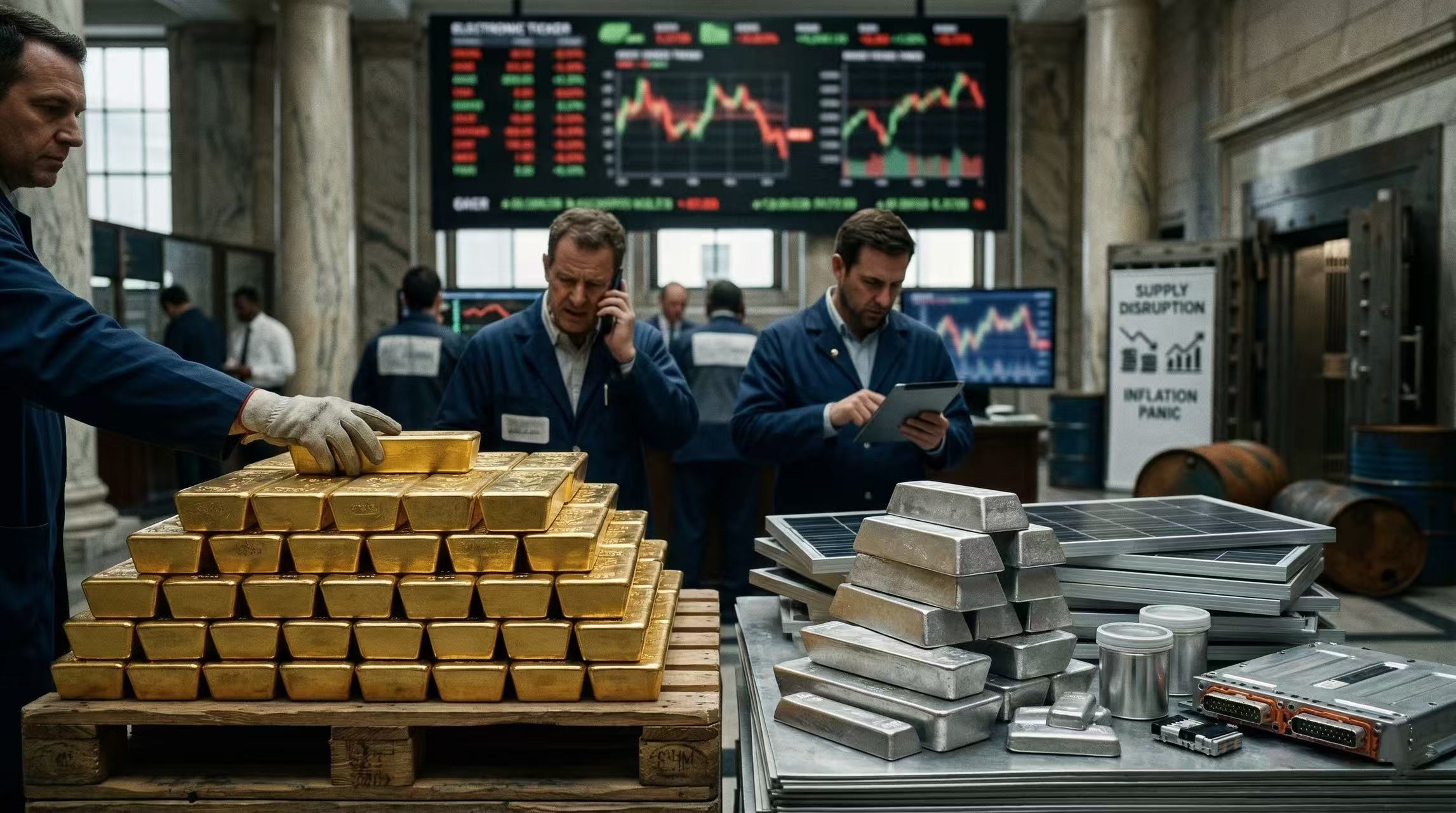
During the 1973–1974 oil embargo, as Western economies slid into the icy depths of stagflation, gold surged by roughly 140%. In the 1979 crisis—triggered by geopolitical upheaval that stripped the market of some 5 million barrels of daily supply—gold breached the $500-an-ounce mark and continued to climb as faith in the broader financial system crumbled. Gold serves as the ultimate psychological barometer of systemic trust; when physical supply chains snap, the yellow metal truly shines.
Silver, however, presents a more complex, far more violent narrative. Notoriously volatile, silver occupies a dual role: it is simultaneously a monetary hedge against currency debasement and a critical industrial component vital for electronics, solar panels, and electric vehicles. In early 2026, silver exhibited its signature explosive power. After breaching $120 an ounce, it suffered a catastrophic 30% single-day plunge, driven by forced margin liquidations in the futures market. Such extreme volatility underscores the profound contradiction inherent to industrial metals during an energy crisis: they are buoyed by inflationary panic, yet heavily anchored by the terrifying prospect of an industrial recession that would decimate physical demand.
Product Hunter
For the operator in the trenches—a cross-border e-commerce merchant, an Amazon FBA brand owner, a SaaS founder, or a global supply chain manager—macroeconomic theory may provide context, but it cannot pay the bills. For such professionals, an oil shock poses a daily, existential threat to the balance sheet. The commercial landscape is currently undergoing a violent, unforgiving paradigm shift: from "optimising for efficiency" to "optimising for survival".
The Demise of Just-In-Time (JIT) and the Dawn of the Just-In-Case (JIC) Era
For four decades, global manufacturing and retail have operated under the strict dominion of Just-In-Time (JIT) logistics. Pioneered by post-war automakers and perfected by consumer electronics titans, JIT decreed that capital tethered to warehouse inventory was effectively dead capital. Components were sourced from the cheapest global jurisdictions and orchestrated to arrive at the assembly line or fulfilment centre exactly when required.
Modern energy shocks and supply chain ruptures have laid bare the fatal fragility of this model. When a single event forces vessels to reroute around the Cape of Good Hope—adding 14 days to a voyage—a lean supply chain morphs into a lethal liability. The global transition toward a Just-In-Case (JIC) architecture is accelerating at breakneck speed.
Shrewd manufacturers and e-commerce operators are actively sacrificing balance-sheet efficiency to erect massive inventory buffers of critical components. Corporate leaders are aggressively diversifying their suppliers, pursuing nearshoring, and swallowing markedly higher baseline storage costs as a mandatory insurance premium against global volatility. If an e-commerce business relies entirely upon a single overseas factory and a fragile air-freight link, the company's entire enterprise value is currently in jeopardy.

The Logistics Bloodbath: Surcharge Surges and Margin Erasure
For e-commerce operators and D2C brands, the transmission of the 2026 oil shock has been immediate and unsparing. Haulage and shipping firms operate on razor-thin margins; they will not absorb the soaring cost of energy. Instead, they will pass it directly and aggressively onto shippers.
This week's data paints a grim picture. Global logistics leviathans immediately triggered cascading price hikes to safeguard their own survival. UPS announced swift upward revisions to its domestic and international ground fuel surcharges, pushing rates beyond 20%. Maritime giants such as Maersk implemented emergency bunker surcharges globally, alongside adjusted environmental levies, tacking hundreds of dollars onto the cost of every container. Suppliers of industrial chemicals and raw materials levied global energy surcharges ranging from 8% to 14%.
In the broader freight market, the mathematical punishment is severe: historical and contemporary data indicate that for every 10% rise in the price of diesel, base freight transport costs swell by 2% to 4%. For a cross-border merchant sustaining a healthy 15% net profit margin, a sudden 30% spike in end-to-end fulfilment and transport costs effectively obliterates all profitability overnight. The strategic imperative is stark: prices must either be raised before margins evaporate entirely, or the product offering must be fundamentally altered.
|
Logistics Node |
Cost Reality |
Impact on SMEs / E-commerce Operators |
|
Ocean Freight (Containers) |
Global activation of Emergency Bunker Surcharges (EBS). |
Landed costs for heavy, low-margin inventory (e.g., furniture, large electronics) skyrocket. |
|
Parcel Delivery (Last Mile) |
Base rates climb in tandem with 20%+ fuel surcharges. |
Margins on "free shipping" models are instantly wiped out. Firms are forced to implement Minimum Order Value (AOV) restrictions. |
|
Raw Material Sourcing |
Tier-1 suppliers levy 8-14% energy surcharges. |
Gross margins on manufactured goods are squeezed. Cheap plastics and packaging materials become un-sourceable. |
The Invisible Tax on SaaS: Cloud Infrastructure
Software founders frequently operate under the delusion that their digital products enjoy immunity from physical supply-chain shocks. This is a fatal miscalculation. Software runs on servers, servers are housed in sprawling data centres, and data centres consume astronomical volumes of electricity for computation and cooling.
A sustained energy shock directly inflates the infrastructure costs of cloud computing. Although hyperscale cloud providers enjoy a degree of insulation via long-term power purchase agreements, the rising cost of grid electricity inevitably trickles down. For independent developers and SaaS founders, this implies that AWS, Google Cloud, or Azure invoices face energy-driven inflation. If a SaaS pricing model is rigid, profit margins will slowly bleed to death as computation costs rise.

Scarcity-Forced Innovation: The Winning Product Niches
Extreme constraints force extreme innovation. Just as the 1973 oil crisis compelled the automotive industry to pivot swiftly toward smaller, highly fuel-efficient vehicles, the 2026 crisis is aggressively dictating consumer purchasing behaviour.
E-commerce data reveals a sharp surge in demand for products promising energy independence, efficiency, and personal resilience. The market has shifted violently away from cheap, disposable novelty items carrying high transport costs, gravitating instead toward high-utility, problem-solving tools.
- Smart Home Energy Optimisers: Hardware capable of proactively monitoring, regulating, and curbing household electricity consumption is seeing unprecedented conversion rates. Consumers are eager to save money on their utility meters.
- Micro-Mobility and Alternative Transport: With daily commuting costs spiralling, high-margin e-bikes, conversion kits, and localised transit gear are dominating consumer searches.
- Low-Tech / Zero-Energy Niches: Ironically, products requiring neither electricity nor complex logistics are thriving. Premium yoga resistance bands for home workouts, or decorative glass candle holders that provide ambience off-grid, are emerging as top-tier drop-shipping commodities because they are cheap to source, light to ship, and entirely immune to electronic component shortages.
For e-commerce executives, the directive is unambiguous: discard products that rely on cheap, frictionless logistics and burdensome shipping weights. The winners of 2026 will be those selling lightweight, high-margin goods that either offer consumers a tangible return on investment via energy savings, or premium, low-tech lifestyle products that bypass electronic supply chains altogether.

Garbo's Commercial Reflections: The Psychology of the Abyss
When a genuine energy crisis strikes, it severs more than just supply chains; it shatters the illusion of perpetual prosperity. Since entering the hyper-globalised digital age, modern consumers have been conditioned to believe in a specific brand of magic. There is a widespread belief that by pressing a button on a smooth glass screen, a physical entity will traverse oceans, cross three continents, navigate a vast network of motorways, and arrive flawlessly at a doorstep within a week. This extraordinary system demands the intricate choreography of geopolitical stability, cheap capital, and, above all, boundlessly cheap energy.
When crude oil stops flowing, the magic fails. And when the magic dies, fear takes its place.
One must pause to consider the psychological "scarring effect" that grips populations during these moments. In the 1970s, as queues at petrol stations stretched for miles and inflation devoured bank balances, an entire generation learned that the engine of progress could abruptly stall. That trauma birthed a profound, intergenerational behavioural defensiveness. Today, that exact trauma is replaying in real time. Consumers are not merely reacting to a steeper price tag on a gallon of milk or a flight ticket; they are reacting to the sudden, terrifying loss of agency over their own futures.
This profound sense of powerlessness triggers humanity's oldest survival instinct: hoarding. Whether it is a panicked corporate procurement officer frantically double-ordering microchips and raw materials, or a single mother quietly stockpiling cash, cancelling subscriptions, and paring back every non-essential expense, the underlying emotional drive is identical. It is a highly rational response to an intensely irrational world. When the future grows perilous and unpredictable, humans contract their time horizons inward. They cease planning for a holiday six months away and focus all their energy on surviving the next five weeks.
As business operators, growth strategists, and investors, it is easy to dismiss these frightened consumers merely as "deteriorating demand metrics" on a spreadsheet. But to exercise true leadership, empathy must be retained. Every basis point of cost-push inflation represents a fractional erosion of human liberty.
Consider the cruelty inherent in the previously discussed K-shaped dislocation. Behemoth corporations armed with elite treasury departments can hedge their exposures in the paper futures market, effectively insulating themselves from the most brutal volatility. Meanwhile, working-class commuters, independent lorry drivers, and small business owners must pay the punishing physical spot price of $140 just to participate in the economy. They cannot afford futures contracts; they must buy petrol today. It is a glaring indictment of systemic inequality, laid bare by a ruptured supply chain.
The absolute core of commerce remains the service of humanity. In an era where the collective mindset is pivoting violently from "endless growth" to "resource anxiety", the most successful enterprises will not be those that merely engineer a clever pricing algorithm to wring the final few dollars from a dying trend. The enduring winners will be those capable of furnishing genuine stability, authentic utility, and a profound sense of security to a populace that feels the earth shifting beneath its feet. If a product, software, or service can alleviate even a fraction of this anxiety, it will earn a lasting loyalty that far outlives the current crisis.

Panoramic Information Chain: A View from the Summit
The echoes of 1973 and 1979 are currently reverberating loudly through the corridors of the global economy. The events of late February 2026 confirm a humbling truth: while digital technologies have advanced exponentially, the physical constraints of the material world remain absolute. The disruption of a single geographic maritime chokepoint can still bring a cloud-based, AI-driven global economy to its knees.
A synthesis of these data presents a stark, undeniable reality: the era of frictionless, zero-cost globalisation has been temporarily suspended. The shift from "Just-In-Time" optimisation to "Just-In-Case" survival is no longer a theoretical white paper debated in business schools; it is a frantic, capital-intensive scramble unfolding in real time.
The classic, unmistakable hallmarks of a historic oil crisis are now visible. The multiplier effect in logistics, the panic premium in physical markets, the monetary policy death trap for central banks, and the behavioural scarring of consumers are all aligning perfectly.

For the reader—the entrepreneur, the investor, the creator—the road ahead demands extreme discipline and limpid vision:
- Immediate balance-sheet de-leveraging. As the cost of capital ascends to combat sticky imported inflation, carrying heavy variable-rate debt amounts to a death sentence for small enterprises. Cash flow remains the sole shield.
- Auditing physical supply-chain exposure. If a business model relies on bulky, low-margin goods ferried via ocean freight, one must ruthlessly prune the product portfolio, secure localised manufacturing, or radically overhaul the pricing structure before margins evaporate entirely.
- Protecting and expanding pricing power. In a cost-push inflationary environment, only entities boasting deep and defensible moats—whether proprietary technology, fiercely loyal cult brands, or the efficiency gains yielded by agentic AI—will survive the margin squeeze.
History does not repeat itself perfectly, but it invariably rhymes. The current disconnect between a fluctuating futures market and a punishing physical reality hints at a looming period of extreme, sustained turbulence. As the tectonic plates of global supply chains violently realign, the mandate is clear: strip away leverage, construct physical and financial buffer zones, and maintain absolute emotional equilibrium in the face of the abyss.
The rules of the game have changed, but those who comprehend the mechanics of the machine will always find a path through the dark.
Report generated by The Niche Hunter.
March 1, 2026
Responses