THE NICHE HUNTER ISSUE: Mar 2 - 8, 2026
The Awakening of the Fifth Commodity Supercycle
Key words: Capacity Reset; Commodity Supercycle; Information Arbitrage; Precious Metals; Hard Assets; New Quality Productive Forces; Anti-involution; Red Horse and Red Sheep
Weekly Message:
The global macroeconomic infrastructure is currently undergoing a violent, systemic, and profound repricing process—one that remains severely misunderstood by the mainstream consensus of global financial markets. Within this critical macroeconomic observation window of March 2026, a perfect storm has coalesced. Fatal bottlenecks across physical supply chains, hardened and irreversible macroeconomic policy shifts by major global economies, and the hyper-financialization of hard assets within capital markets have converged to form an undeniable and brutal reality.
For over a decade, the global economy operated under the assumption of an endlessly cheap and infinitely abundant physical input era. This specific period implicitly provided a colossal, invisible subsidy to global digital software hegemonies and asset-light commercial models, which thrived in an environment largely devoid of physical constraints. Today, that era has come to an abrupt and permanent halt. The abstract concept of the digital economy's limitless, exponential growth is now colliding head-on with the cold, rigid, and unforgiving physical limits of the real world, generating massive economic shockwaves capable of destroying established business paradigms.
Rather than adhering to traditional, backward-looking macroeconomic data summaries, the analytical framework presented herein introduces a core interpretative lens that permeates the entire assessment: the "Time Machine Theory" and the mechanics of "Information Arbitrage".
The Time Machine Theory, historically utilized by prominent technology investors to predict the delayed development of emerging markets by observing established ones with a lag of five to fifteen years, constructs a ruthless yet highly forward-looking worldview. It posits that the structural, deep-seated transformations occurring today within the world's primary industrial engines—specifically within the Chinese industrial system, its central policy directives, and its foundational regulatory architecture—will inevitably cross geographic and market boundaries.
Over the next six to eighteen months, these structural shifts will translate with terrifying precision into severe margin compression across Western markets, debilitating supply-chain bottlenecks, or unprecedented, generational opportunities for wealth redistribution. This mechanism of transmitting information across time and space offers a superb defensive and arbitrage window for market participants equipped with systemic thinking, effectively closing the information gap between institutional entities and the broader market. The core imperative is to map the precise trajectory of this economic shockwave before it comprehensively decimates the balance sheets of global enterprises.
The Three Pillars: Establishing the Strategic Baseline
Anchored in the worldview of the Time Machine Theory, the analysis distills three core pillars that define the overarching market sentiment for the first quarter of 2026 and the entirety of the calendar year. These pillars transcend mere catchphrases; they encapsulate the current systemic trends and establish the foundational strategic expectations for professional decision-makers navigating this volatile landscape.
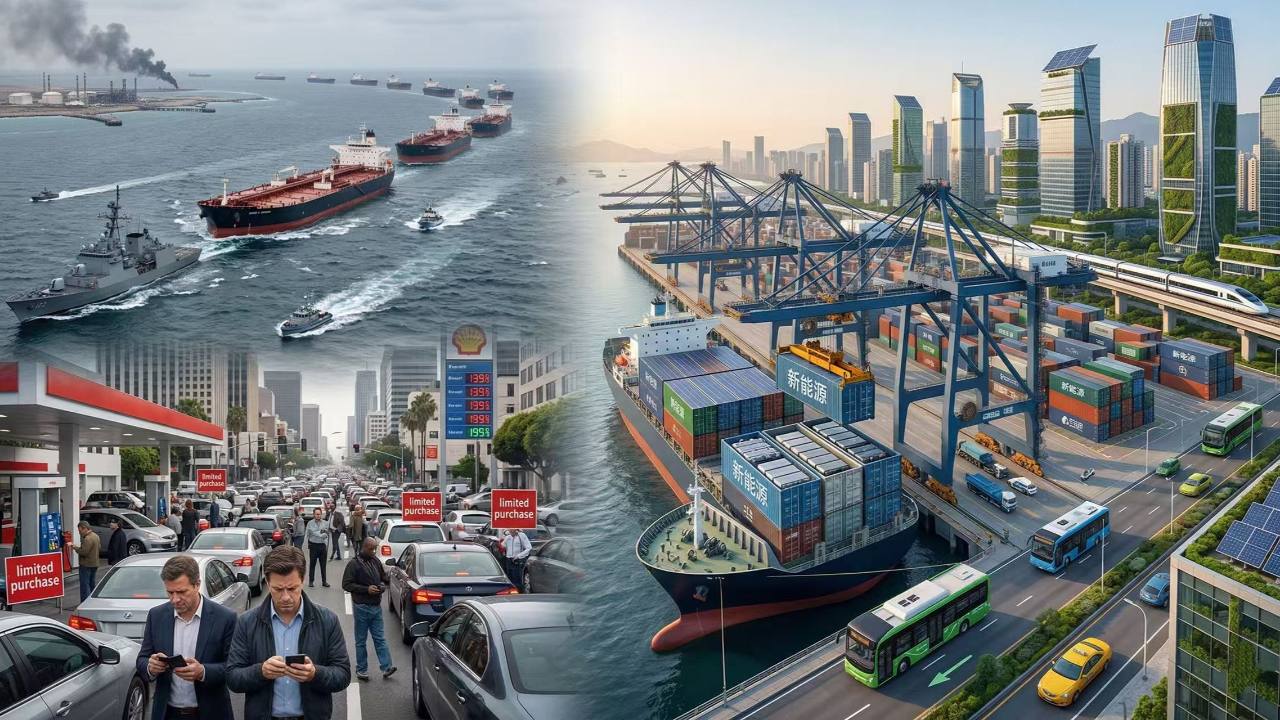
The first pillar is the Revenge of Physical Limits. This environment bears no resemblance to the mild, traditional demand-pull inflation characteristic of the early 2000s, which was largely ignited by rapid industrialization and integration into global trade frameworks. Instead, it marks the awakening of the fifth commodity supercycle since the dawn of the Industrial Revolution. A confluence of factors has established an insurmountable floor for physical assets: a full decade characterized by the systemic deprivation of capital expenditure in extractive industries, exacerbated by stringent environmental, social, and governance (ESG) hurdles; the extreme fragility of logistics bottlenecks highly susceptible to geopolitical hijacking 1; and the defensive hoarding of critical resources by sovereign nations driven by absolute national security imperatives. The value of physical atoms is currently executing a ruthless, upward revaluation against the vastly inflated digital bits that dominated the past fifteen years.
The second pillar is "Capital Dislocation." This is no mere skirmish in micro-financial positioning; rather, it represents an unprecedented "Expectation Chasm"—a profound rupture between the dominant global capital-pricing models and an increasingly fractured macroeconomic reality. Over the past decade and more, despite divergent inflationary and growth cycles across various economies, the deluge of liquidity unleashed by core central banks—the Fed, the ECB, and the BoJ—has forcibly compressed global risk premiums. This liquidity-backed "asset illusion" has deeply anchored the expectations of vast multinational capital in an obsolete consensus: one predicated on the belief that geopolitical friction costs would trend toward zero and that global supply chains possessed near-infinite elasticity.
Today, as great-power rivalry fragments markets, supply chains undergo physical reconfiguration, and the cost bases of core economies experience an irreversible upward shift, the behemoths of global capital remain hamstrung by a lethal path dependency. Traditional valuation models still cling to the daydream of "Mean Reversion" to price future risks, failing to account for widening geopolitical premiums or the "territorial scarcity" inherent in commodities and hard assets. This systematic misalignment, fueled by flawed parameters, is fermenting a volatile revaluation potential across all major asset classes. When the unyielding rigidities of the physical world and genuine inflationary divergence finally shatter the old framework of "frictionless arbitrage," global capital will inevitably undergo a convulsive, painful migration of paradigms and a wholesale replacement of underlying assets.
The third pillar is the Capacity Reset. The era wherein the Eastern hemisphere served as the perpetual source of exported deflation for the global economy has definitively concluded. Accompanied by the issuance and rigorous legal enforcement of top-level, state-driven directives such as "anti-involution" (the prevention of destructive internal competition), the cutthroat price wars that Western consumers and cross-border e-commerce sellers once took for granted have been forcibly terminated by administrative and legal mandates. With the domestic macroeconomic environment seeking to correct prolonged declines in the GDP deflator caused by excessive overproduction, the foundational cost center of the global supply chain is undergoing a permanent upward adjustment. This paradigm shift promises to deliver a devastating blow to the global asset-light commercial ecosystem, which has long relied on the arbitrage of ultra-cheap manufacturing.

The Signals: Capturing Micro-Structural Realities
To accurately navigate this environment, it is necessary to strip away the superficial noise of broad macroeconomic narratives and delve deeply into the micro-structure of market trading and the physical operational trajectory of the real economy, thereby surfacing concrete, empirical evidence.
Dimensional Reduction: The Commodity Tapestry and the Domino Law
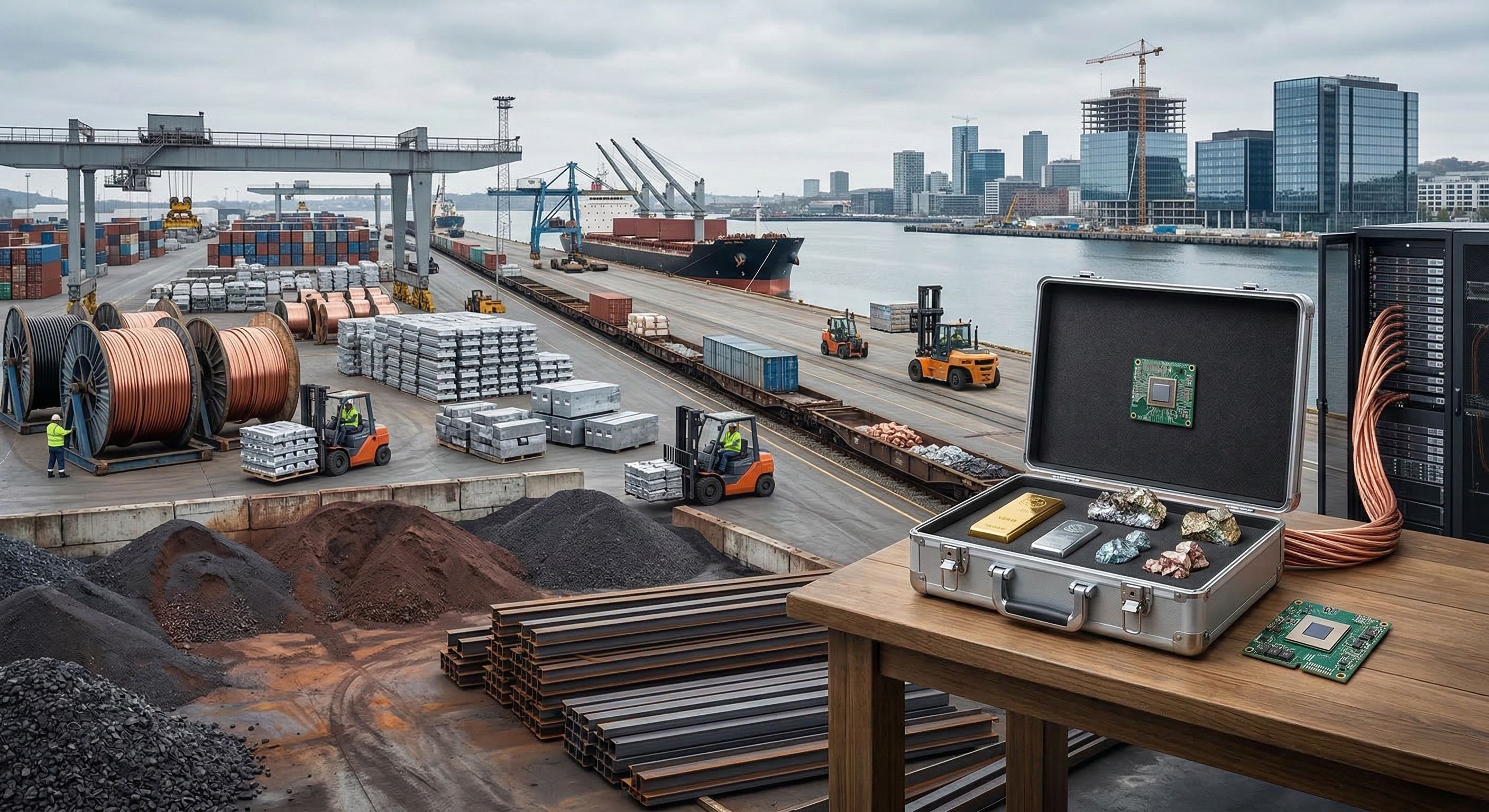
Before tracking granular micro-signals, a fundamental, simplified framework of commodities must be established to allow non-specialist decision-makers to pierce through the macroeconomic fog. Commodities are the globally standardized, bulk-tradable, physical assets that underpin the absolute foundation of global commerce. Within the modern industrial landscape, which is inextricably linked to the artificial intelligence era, these foundational materials are divided into two primary camps: ferrous metals and non-ferrous metals. However, in the current technology- and geopolitically-driven supercycle, the true pricing power and wealth-generation mechanisms are monopolized by three core sectors and their underlying industrial logic:
- Precious Metals: Represented by gold, silver, platinum, and palladium. Beyond their extreme rarity and high corrosion resistance, they possess profound monetary attributes and function as the ultimate safety net for the financial system. During periods of acute crisis, market turmoil, and systemic vulnerability, they serve as the definitive safe haven against fiat currency devaluation, hyperinflation, and the fracturing of geopolitical alliances.
- Base and Industrial Metals: Represented by copper, aluminum, zinc, nickel, lead, and tin. These are the relentless workhorses of modern civilization, characterized by exceptional electrical conductivity, malleability, and resistance to oxidation. From massive national smart grids and the lightweight chassis of new energy vehicles to the gargantuan cooling and power transmission pipelines required by data centers, industrial metals constitute the absolute infrastructure at the intersection of the digital and physical worlds.
- Minor Metals and Rare Earths: Including gallium, silicon, neodymium, terbium, and europium. While their global consumption volumes and geological reserves are comparatively minute, they function as the indispensable brains and neurons of advanced electronic circuitry. They play an irreplaceable, decisive role in cutting-edge semiconductor manufacturing, advanced microchip packaging, high-frequency data transmission networks, and modern national defense systems.
The Supercycle Transmission Chain: A Calculated Domino Effect
The sequence of sectoral rotation identified within this supercycle—wherein precious metals inevitably ignite the cycle as monetary vanguards, followed by capital rotating into industrial metals, leading to an explosive surge in the energy sector, and finally concluding with agriculture as the ultimate defensive play—is not financial mysticism. It is a precise domino effect deeply rooted in macroeconomic theory and the unyielding laws of industrial manufacturing. Throughout every major commodity bull market since 2008, this transmission chain has demonstrated a cold, predictable, and mechanical inevitability.

Phase One: The Awakening of Precious Metals (The Monetary Vanguard). The inception of every supercycle is invariably accompanied by the profound fear of economic recession, extreme geopolitical turbulence, or a deep-seated crisis of faith in fiat currency credit. In this phase, hyper-sensitive institutional capital rapidly flees overvalued risk assets, flooding into gold and silver to capture their inflation-hedging and safe-haven properties. The preemptive, violent surge in precious metals is fundamentally a vote of no confidence cast against the existing fiat monetary system—the first piercing siren signaling an approaching economic hurricane.
Phase Two: The Baton Passes to Industrial Metals (Physical Recovery and Capacity Bottlenecks). As market panic is incrementally digested, global manufacturing enters an aggressive inventory restocking phase, igniting the engines of real economic recovery. In the current cycle, the dual, inelastic demands of the computing arms race and the global green energy transition—which requires a projected 70% increase in copper production by 2050—have triggered highly technical, price-insensitive panic buying. Constrained by excruciatingly long, heavily regulated, and exorbitant mine development timelines, base metals instantly encounter severe physical supply bottlenecks. Consequently, prices skyrocket under the sheer force of concentrated capital inflows.
Phase Three: The Comprehensive Eruption of the Energy Sector (Fuel Exhaustion). The full-throttle operation of the global industrial machine, coupled with the vast air, land, and maritime logistics networks required to transport these heavy metals and finished goods across the Earth's surface, begins to ferociously devour underlying fuel resources. Driven by the resurgence in industrial electricity consumption and expectations of recovering global consumer spending, the demand for crude oil, coal, and petrochemical products experiences a parabolic ascent. This completes the midstream transmission of the resource pricing cycle, culminating in an exceptionally violent, broad-based rally in energy prices.
Phase Four: Agriculture Secures the Rearguard (The Ultimate Survival Defense). Once the massive price appreciations in precious metals, industrial metals, and energy are fully digested and priced in by the financial markets, this colossal inflationary pressure cascades like a tsunami into the furthest downstream consumer sectors. Exorbitant crude oil and natural gas prices directly inflate the manufacturing costs of agricultural fertilizers, while skyrocketing freight rates compound the costs of transnational agricultural logistics. At this critical juncture, if exacerbated by extreme weather events or sovereign panic regarding food security, agricultural resources tied to the baseline of human survival are guaranteed to undergo a violent, defensive catch-up rally, effectively drawing the commodity supercycle transmission to a close.
With a clear grasp of this foundational commodity taxonomy and rotational law, the analysis shifts to capturing the micro-transactional signals currently hovering on the eve of explosion, evaluated through three core dimensions: the Product, the Capital, and the Profile.
The Product Hunter: Tracking Physical Scarcity
The aggressive, vertical price action currently witnessed across global commodities is not a transient, reflexive reaction to isolated geopolitical friction. It is the inevitable manifestation of structurally locked supply bottlenecks colliding with the radical financialization of global capital. As of mid-March 2026, global markets are thrashing through a violent and chaotic transition phase, moving from the industrial metal shock into the energy shock. The underlying physical products are aggressively reclaiming pricing power from abstract financial markets.
Serving as the ultimate, unfiltered barometer of systemic liquidity conditions and the degradation of fiat currency credibility, precious metals have acted as the absolute vanguard of this cycle. In early 2026, gold exhibited unprecedented, historic volatility. During the first week of March, gold prices experienced a violently explosive rally, effortlessly breaching the historic threshold of $5,400 per ounce, before entering a phase of ferocious consolidation within a highly volatile band around $5,156.
While traditional equity investors might interpret such extreme volatility as a harbinger of market collapse, viewed through the analytical lens of information arbitrage, this price action is the classic hallmark of a mid-cycle liquidity shakeout.
A profoundly deeper signal lies in the total, permanent severance of gold's traditional negative correlation with risk assets. Gold has surged simultaneously as major equity indices hover near historic highs. This anomaly reveals that supranational entities, notably emerging market central banks, are hoarding physical gold at a historic, price-agnostic velocity, driven by an urgent mandate to de-dollarize and construct fortifications against Western financial sanctions. Concurrently, silver has demonstrated massive leveraged beta relative to gold, aggressively front-running the comprehensive unfolding of global inflation risks.
Within the base metals complex, copper is undergoing an epic, epochal value re-rating, solidifying its status as the indispensable physical infrastructure of the new digital economy. The narrative governing copper pricing has completely and permanently detached from its traditional macroeconomic anchor: the Chinese residential real estate market. Despite Chinese property development enduring a protracted, structural depression characterized by substantial oversupply and plummeting construction starts, copper prices have maintained a terrifying resilience. According to the latest market data from March 16, 2026, copper prices have surged forcefully to $5.80 per pound, marking a 1.47% daily increase and an astonishing 17.20% spike compared to the same period last year. Although a robust US dollar and elevated Treasury yields have exerted transient downward pressure on metals, the escalation of Middle Eastern geopolitical tensions—specifically, the weekend military strikes by the United States on major oil export centers—has exponentially expanded the risk premium associated with supply disruptions.
The deeper logic driving this revaluation is a total displacement on the demand side. The traditional discount applied to base metals by Western analysts, predicated on housing market weakness, is now being utterly overwhelmed by a voracious, entirely price-insensitive demand vector defined within macroeconomic strategy as "New Quality Productive Forces". The massive modernization of national power grids, the relentless penetration of domestic electric vehicles, and crucially, the explosive, exponential expansion of data centers have established a high-certainty, impenetrable floor for long-term copper demand.
|
Copper Market Structural Repricing Model |
Traditional Macro Pricing Model (Pre-2023 Dominance) |
Current Structural Pricing Model (March 2026 Dominance) |
|
Core Demand Catalyst |
Residential real estate construction, traditional urbanization infrastructure. |
Computing data centers, grid modernization, global energy transition. |
|
Micro Price Sensitivity |
Extremely High (Construction contractors actively seek low-cost substitute materials when prices peak). |
Extremely Low (Infrastructure is mission-critical; copper represents an irreplaceable physical bottleneck). |
|
Supply Elasticity & Cycle |
Moderate (Idle mining capacity could be readily activated during traditional cycles). |
Severely Constrained (Global ore grades have plummeted; ESG mandates extend new mine development cycles beyond 10 years). |
The supply-side reality is even more draconian, with data from the smelting sector broadcasting the most glaring distress signal. Because the expansion of refined copper smelting capacity has drastically outpaced the actual growth rate of mined copper concentrate supply, benchmark treatment and refining charges collapsed to exactly $0 per ton earlier in 2026. Smelters are demonstrating a willingness to process ore for free merely to keep their equipment operational—the ultimate, mathematical proof that physical scarcity lies deep within the mines themselves, not in processing capacity.
The Uranium Renaissance and the Logistics Shock
As the commodity rotation violently enters the energy phase, the renaissance of uranium has emerged as the unavoidable, dominant theme for baseload power. Amidst the chaos and geopolitical maneuvering inherent in traditional hydrocarbon markets, a silent yet monumental structural shift is occurring within the nuclear sector. A landmark capital formation event illustrating this trend is the massive, highly successful initial public offering of China National Uranium Co. on the Shenzhen Stock Exchange, crowning it as the first pure-play natural uranium equity in the A-share market. Trading under the code 001280.SZ, the listing bolsters national energy security by securing critical strategic mineral resources. As of March 17, 2026, this equity has exhibited breathtaking explosive power. After breaching the 90 RMB threshold, it has consolidated at elevated levels, boasting a cumulative year-to-date return of 47.73% and a staggering trailing twelve-month price-to-earnings ratio of 90.31.
The final, lethal blow on the product side is delivered by the strangulation of logistics chokepoints and the hyperinflationary impact of a global freight tax. Regional disruptions across critical maritime corridors have injected massive, highly sticky risk premiums into physical markets. Overall maritime security remains exceptionally fragile, triggering phenomena such as a super sulfur shock that has cascaded from fertilizer to chemical sectors. Highly erratic benchmark crude prices have drastically inflated downstream transportation and agricultural input costs. Most devastatingly, war risk insurance premiums for vessels transiting high-threat zones have surged by 50%, while container freight rates on vital arteries—such as the corridor from India's west coast to the Middle East—have skyrocketed by a staggering 1,136% in just over a week. For Western cross-border e-commerce operators, the logistical cost of physically moving atoms across the planet has completely decoupled from the cost of manufacturing those atoms. Asset-light, cross-border arbitrage strategies reliant on ultra-cheap shipping are now facing systemic, industry-wide annihilation.

The Capital Hunter: Tracking Institutional Flows
The extreme pricing behavior in commodity markets does not evolve in a vacuum; it is strictly and absolutely subservient to global macroeconomic liquidity conditions and the directional trajectories of underlying capital. A forensic-level analysis of global positioning data from the first week of March 2026 reveals a terrifying, historic divergence between institutional reality and retail mania. Capital is coldly and methodically deploying for an era of protracted resource scarcity and structurally entrenched inflation.
On the macroeconomic liquidity front, quantitative models aggregating monetary data from major global central banks distinctly indicate that global liquidity indices have crested at a regional summit and are actively entering a contractionary channel. Historical cyclical patterns dictate that global liquidity consistently serves as the ultimate leading indicator, generally preceding peaks in risk-asset pricing by three to six months. The trajectory of the US dollar index provides flawless mutual corroboration. After testing the lower boundary of a macroeconomic ascending trendline that has held firm for over a decade, the dollar is executing a violent technical rebound infused with profound structural implications. A strengthening dollar mechanically tightens systemic liquidity on a global scale, applying lethal downward pressure on emerging market equities and traditional, non-yielding risk assets.
This exhaustion of peak liquidity strongly signals that the spectacular, yet fundamentally undisciplined rally witnessed over recent months has entirely depleted its kinetic energy. Massive swaths of capital are now being forcibly redirected into defensive rotations, hunting for hard assets capable of providing tangible physical utility rather than speculative, abstract digital growth. Veteran market observers have issued severe warnings, highlighting that the paramount risk in 2026 lies in an equity market dangerously intoxicated by narrative bubbles. Should equities endure sharp volatility due to liquidity contraction, all global assets will face a relentless, indiscriminate correction.
This great capital divergence is most starkly and violently visible within the sovereign bond markets. Debt market data exposes a positioning fracture unprecedented in modern financial history. Retail investors have amassed record-breaking absolute long positions on the 10-year Treasury note. Intoxicated by the macroeconomic illusions of the past decade, they are heavily and emotionally wagering that central banks will execute a series of aggressive rate cuts, blindly pricing in a pristine, flawless deflationary environment.
Conversely, the institutional capital that dictates the pulse of the global economy is taking the exact opposite stance, accumulating the largest net short position on the 10-year bond in recorded history. Institutional funds possess acute clarity that inflation is substantially more entrenched than consensus estimates suggest, fueled by ongoing supply-chain constraints and expansive industrial policies globally. Furthermore, they recognize that the enduring commodity supercycle will coercively enforce a dictatorial higher-for-longer interest rate regime. Top-tier banking management has bluntly observed that the credit environment is currently flashing dangerous warning signs reminiscent of the eve of the 2008 financial crisis. The implications of this divergence for global business operators are absolute and profound: the cost of capital will never return to zero. Any highly leveraged commercial model predicated on the assumption of a return to a zero-interest-rate environment has already, by sheer mathematical logic, been rendered bankrupt in advance.
At the intersection of primary and secondary markets, the hyper-crowded trade within the semiconductor sector has become the most dangerous overhang suspended above global capital. While grand narratives proclaiming technological revolutions have propelled hardware equities to historically manic valuations, the underlying, short-term economic cycles of the hardware industry narrate a brutally contradictory reality. Current quantitative indicators ruthlessly demonstrate that the global semiconductor sector is entering a severe, late-cycle topping process. Institutional and retail positioning in these equities is exceedingly crowded, and historical precedent guarantees that such extreme clustering ensures maximum downside volatility.
Concurrently, the affiliated software industry faces the imminent threat of a default wave, triggered as exorbitant infrastructure investments crowd out traditional consumer spending. The financial markets have absurdly compressed the potential hardware demand of the next decade into a single quarter of valuation euphoria. As the cyclical peak collides with the scythe of liquidity contraction, the strategy of decisively taking chips off the table to stockpile massive cash reserves has become the sole rational mechanism for capital preservation in this space.
Price action in Asian markets has already inaugurated the collapse. Memory chip behemoths, after seeing valuations soar by nearly 50% early in the year on the back of component shortage narratives, suffered violent, double-digit percentage wipeouts in a matter of days. Concurrently, the affiliated software industry faces the imminent threat of a default wave, triggered as exorbitant infrastructure investments crowd out traditional consumer spending.
The financial markets have absurdly compressed the potential hardware demand of the next decade into a single quarter of valuation euphoria. As the cyclical peak collides with the scythe of liquidity contraction, the strategy of decisively taking chips off the table to stockpile massive cash reserves has become the sole rational mechanism for capital preservation in this space.
The Profile Hunter: Decoding the Behavioral Drivers
During periods of complex macroeconomic transition and paradigm rupture, violent fluctuations in asset prices are rarely just the organic evolution of cold data; they are forcefully driven by specific demographic archetypes and the profound collective psychological narratives that govern them. Decoding these psychological pivots is paramount to anticipating the trajectory of future trends. The core driving forces of the 2026 cycle can be precisely categorized into two diametrically opposed, yet mutually reinforcing, archetypes.
The first archetype is The Sovereign Accumulator. This cohort encompasses emerging market central banks, state-level energy monopolies, and strategic resource reserve agencies commanding vast foreign exchange arsenals. The foundational narrative driving their ferocious accumulation has entirely decoupled from classic return on investment models. The Sovereign Accumulator purchases physical gold at record velocity not for yield, but to execute de-dollarization and construct impenetrable moats against financial sanctions in an increasingly fractured geopolitical landscape. They relentlessly acquire uranium, copper, and critical rare-earth elements to guarantee their nations are not strategically suffocated by external powers during the transition toward advanced manufacturing and baseload energy independence over the next decade. Because their metric of success is calibrated in terms of national survival probability and strategic independence, Sovereign Accumulators exhibit extreme insensitivity to short-term asset price volatility. This cost-agnostic sweeping of global inventory directly short-circuits traditional price discovery mechanisms, establishing unshakeable, exceptionally elevated price floors for physical hard assets.
The second archetype is The Fortress Individual. This group represents small-to-medium cross-border vendors facing margin annihilation as globalization dividends evaporate, independent developers suffocating under astronomical cloud computing bills, and middle-class investors violently awakened from the illusion of perpetual prosperity. Having endured prolonged social atomization, extreme industrial competition, and the relentless erosion of purchasing power via inflation, this cohort has acutely recognized the lethal fragility of asset-light models entirely dependent on external computational power and transnational supply chains. Their psychological narrative is executing a complete reversal. They are retreating from the aggressive, highly offensive hustle culture that glorified the pursuit of rapid financial freedom via endless software launches. In its place, they are adopting hyper-defensive balance sheet protection strategies. In micro-commercial decision-making, the Fortress Individual has decisively abandoned bottomless price-dumping strategies, prioritizing absolute cash-flow security and operational survivability. Regarding asset allocation, they have begun to harbor deep skepticism toward ethereal digital currencies and technology equities trading at astronomical multiples. Instead, they are aggressively redirecting capital toward tangible entities and hard-core skills capable of withstanding hyperinflation and supply-chain severances. The comprehensive awakening of the Fortress Individual is the ultimate manifestation of macro-structural pressure transmitting directly into micro-human behavior.
The Decoder: Translating the Lexicon of the New Paradigm
The evolution of culture and fundamental language consistently serves as the most sensitive leading indicator of sweeping economic cycles. To successfully execute cross-temporal information arbitrage, analysts must profoundly and accurately decipher the emerging vocabulary of the source markets—particularly the policymaking apparatus and massive societal base that dominate global manufacturing capacity. During the critical legislative sessions in March 2026, a torrent of new terminology erupted from policy halls and public discourse. These terms transcend mere linguistic phenomena; they formulate a literal roadmap outlining the future realities of global supply chains and baseline cost structures. The analysis targets three central pieces of jargon that dictate the current cycle, decoding their literal meanings, profound policy implications, and lethal ramifications for the global commercial architecture.
1. Anti-involution (Neijuan)
Literal Meaning: Originally an academic term borrowed from sociology, involution describes an economic or social state wherein continuous internal inputs yield persistently diminishing marginal returns. It paints a suffocating portrait of a society trapped in an endless, hyper-competitive, zero-sum slaughter. Participants in this vicious cycle thoroughly annihilate their own profit margins and physical well-being without generating any net new value for the broader industry.
Deep Policy Translation: Within the solemn context of 2026 macroeconomic policy, anti-involution has completely metamorphosed. It has transitioned from a vague, self-deprecating internet meme into a relentless industrial rectification campaign, initiated by supreme administrative authorities and armed with absolute, rigid legal binding force. This shift represents a deliberate effort to address the chronic malaise of excess supply, falling profits, and consecutive quarterly contractions in the GDP deflator. According to precise governmental frameworks, the state will aggressively strengthen anti-monopoly frameworks and combat unfair competition, enforcing rigid constraints. Recently amended anti-unfair competition laws have actively banned pure price wars. The state is deploying a multi-dimensional arsenal—encompassing capacity regulation, standard leadership, price enforcement, and quality supervision—to conduct in-depth rectifications of involutionary competition. This represents a violent escalation compared to the milder directives of prevention seen in prior years.
Commercial Implication (The Time Machine Effect): The comprehensive legalization and enforcement of anti-involution policies represent a titanium-grade, supply-side constraint forcibly imposed at the very headwaters of the global supply chain. The primary objective is to defend the psychological integrity of the industrial workforce and repair the battered balance sheets of core national enterprises struggling with overcapacity. For a decade, Western consumers, asset-light drop-shippers, and multinational e-commerce titans were the greatest, albeit invisible, beneficiaries of this involution. Countless factory owners sprinted on a treadmill, slashing ex-factory prices to the brink of bankruptcy merely to keep machines running, effectively dumping massively deflationary, ultra-cheap goods onto global markets. Today, as anti-involution policies legally outlaw cutthroat price wars and forcibly encourage sector consolidation to defend price floors, the era of endlessly sourcing ever-cheaper homogenous widgets is permanently dead and buried. Importers, retailers, and asset-light vendors will feel the crushing weight of this transmission by the third quarter of 2026: their cost of goods sold will experience an irreversible, relentless upward surge. Any business model attempting to sustain geographic price arbitrage on razor-thin margins will be ruthlessly eviscerated by the twin blades of surging factory-gate prices and exorbitant freight taxes.
2. New Quality Productive Forces
Literal Meaning: This vocabulary denotes an advanced form of productivity that entirely breaks away from traditional economic growth models reliant on low-end labor and extensive, debt-fueled capital expansion. Instead, it relies heavily on cutting-edge technological innovation, automation, and the deep integration of emerging industries to drive high-efficiency output without relying on an expansion of labor input.
Deep Policy Translation: This term stands as the absolute, immovable epicenter of economic policy, serving as the bedrock for the forthcoming Fifteenth Five Year Plan spanning 2026 to 2030. It signals a monumental, unprecedented, and irreversible strategic migration of macroeconomic growth engines. Colossal volumes of state capital are being ruthlessly extracted from the debt-driven residential real estate and traditional infrastructure sectors that fueled the past twenty years of growth. Guided by a new national system of centralized capital allocation, this funding is being aggressively and unapologetically redirected into high-end manufacturing: semiconductor fabrication, humanoid robotics, commercial aerospace, biotechnology, quantum computing, and grid-scale battery storage.
While policymakers set the overall GDP growth target at a relatively moderate 4.5% to 5%, this is emphatically not a signal of economic weakness, as superficially diagnosed by certain segments of the financial press. Rather, it is a staggering display of supply-side strategic discipline by a mature economy leveraging vast human capital and a complete industrial chain system. The state is explicitly willing to absorb the short-term pain of decelerated headline GDP growth to forcibly underwrite a violent, leapfrog upgrade of its entire national industrial architecture, solidifying its status as an innovation superpower.
3. Red Horse and Red Sheep (Bingwu and Dingwei)
Literal Meaning: This is an ancient cultural concept rooted deeply in traditional astrology and the sexagenary cycle. According to this framework, 2026 is the year of Bingwu—the heavenly stem Bing corresponds to fire, and the earthly branch Wu corresponds to the Horse, hence the Fire Horse or Red Horse. Similarly, 2027 is the year of Dingwei, the Fire Sheep or Red Sheep. The confluence of these two years creates a dual-fire overlap, manifesting an aura of pure yang energy. In this theoretical framework, fire dictates extreme volatility, illumination, and massive, disruptive transformation.
Deep Psychological Translation: Within the profound depths of historical and cultural memory, the Red Horse and Red Sheep catastrophe has never been a lighthearted concept. It is historically viewed as a fateful cycle fraught with extreme turbulence, massive systemic subversion, and inevitable, brutal volatility. Historians and folk prognosticators eagerly attribute major historical regime changes, social upheavals, and systemic crises—such as the humiliating Jingkang Incident of the Song Dynasty—to the Bingwu and Dingwei years. While quantitative Western models dismiss this as utterly baseless mysticism, this deeply ingrained cultural mythology has permeated the social psychology of vast Eastern manufacturing bases like a virus. It has infiltrated the subconscious decision-making of entrepreneurs and the baseline flow of capital. The societal collective harbors a catastrophic, subconscious anticipation of imminent black swan events, breeding an atmosphere of extreme anxiety and an overriding instinct to fortify against systemic collapse.
Commercial Implication (The Time Machine Effect): Macroeconomics is, in large part, the projection of collective human psychology. When tens of thousands of operators within global manufacturing hubs are subconsciously driven by cultural anxiety to brace for catastrophic impact, their micro-commercial behavior undergoes radical mutation. Factory owners gripped by the defensive mindset of the Red Horse and Red Sheep will instinctively and aggressively hoard upstream raw materials, objectively exacerbating global commodity inflation. Furthermore, they will develop an acute terror of extending generous credit terms or prolonged payment windows to foreign buyers. Instead, they will demand substantially faster, or even fully upfront, secure payment schedules. This psychological state, originating from ancient cultural anxiety, will trigger a butterfly effect that translates directly and violently into sharply constricting liquidity terms and suffocatingly high trade-friction costs on the balance sheets of Western buyers.

Garbo's Take: The Brutal Revenge of the Physical World
The analytical class operating within the macroeconomic sphere constantly faces a lethal occupational hazard: the habitual, clinical reduction of a flesh-and-blood global economy into an inorganic matrix of cold candlestick charts, basis-point shifts on yield curves, and volatility parameters within options pricing models. Operating from climate-controlled trading floors equipped with vast arrays of high-resolution monitors, observing a trans-oceanic container freight index inexplicably skyrocket 1,136% within a fleeting window, or tracking an explosive short-squeeze in copper on a metals exchange, the most primal instinct is to rapidly deploy complex algorithms to calculate precise cross-period or cross-market arbitrage spreads. However, this analytical perspective, pathologically obsessed with the superficial efficiency of capital flows, ensures that observers remain entirely blind to the profound, excruciatingly painful structural traumas and paradigm shifts currently erupting from the very bedrock of human society.
The commodity supercycle squeeze erupting in 2026 is definitively not a routine financial event that can be casually hedged away via simple portfolio rotation or the purchase of out-of-the-money call options. At its core, it represents an epic, forced, generational transfer of wealth from the arrogant digital class back to the physical class that controls tangible resources. In this brutal macroeconomic pillaging, the global middle class—which steadfastly believed that diligent cognitive labor guaranteed a secure existence—has tragically become the largest demographic of collateral damage in this systemic revaluation.
A retrospective analysis of the past fifteen years reveals a society intoxicated by central banks pumping the potent anesthetics of zero-interest-rate policies and quantitative easing into the system. Western society, and indeed global commercial culture, descended into an almost religious veneration of the asset-light model. The financial sector bestowed supreme, gravity-defying valuations upon corporations that owned absolutely nothing in the physical realm—matchmaking platforms connecting supply and demand via a few lines of code, and cloud-parasitic software enterprises boasting marginal reproduction costs of zero. Amidst this euphoria, an extraordinarily delusional cultural arrogance took root. The market audaciously assumed that the laws of physics and the constraints of nature were obsolete relics of the past. It held a steadfast conviction that the energy driving human civilization would remain eternally cheap and inexhaustible, and that complex global supply chains possessed infinite elasticity and indestructible resilience.
However, the inflation-driven commodity squeeze of 2026 is the physical world's ruthless, entirely inevitable awakening and thunderous revenge against the virtual economy, following an extended era of systemic disrespect and capital starvation. A ton of copper ore, buried deep within a mountain range and requiring a decade of grueling labor and massive heavy machinery to extract, is entirely indifferent to the attractive daily active user acquisition metrics of a meticulously designed social media application. A fully loaded cargo vessel, trapped in high-risk maritime zones due to geopolitical blockades, absolutely cannot be instantaneously teleported to its destination port via an agile software patch deployed overnight by a programmer, nor by a clever public relations pivot.
If market participants extract only one paradigm-shifting axiom from the global intelligence streams to navigate the next decade, it must be this cold, hard assertion: The premium awarded to generalized human cognitive labor is currently undergoing a precipitous, catastrophic deflation, while the premium commanded by the physical atoms that constitute the underlying architecture of the world is locked in an unstoppable, vicious hyperinflation.
The large language models of artificial intelligence are commoditizing the cognitive labor upon which the middle class relies to maintain a dignified standard of living at a terrifying, exponential velocity. Whether the skill involves writing pristine, highly logical code architecture, drafting dense and impenetrable commercial legal contracts, or generating highly persuasive marketing copy—the very core competencies that once fortified class barriers—the market value of these skills is rapidly accelerating toward the dangerous precipice of a zero marginal cost.
On the absolute reverse side of the equation, physical costs are demonstrating explosive, geometric expansion. The capital required to extract a ton of copper from an exhausted earth to feed the ravenous thermal dissipation demands of the computing frenzy, the cost to refine a pound of natural uranium to provide uninterrupted baseload power to data centers, and the insurance and logistical expenditures required to safely navigate a physical container packed with manufactured goods through a militarized maritime jungle—all are surging exponentially.
This is the greatest, most profound economic inversion of our era. It elucidates precisely why heavily capitalized institutional money possesses the audacity to defy consensus and accumulate the largest short position on sovereign debt in modern history. Their aggressive short positioning is decidedly not a reaction to trivial deviations in employment data or minor perturbations in short-term inflation metrics. They are heavily short because their piercing analytical gaze recognizes that, for the entirety of the next decade, humanity's core imperative will be forcibly ripped away from constructing virtual realities and violently redirected toward the agonizingly heavy, tangible task of rebuilding the physical infrastructure of the Earth. This monumental endeavor encompasses the construction of vast, localized smart grids capable of withstanding extreme climate events, the pouring of millions of tons of concrete for massive nuclear reactor arrays, the reconstruction of highly redundant, intra-regional supply chains, and the allocation of astronomical capital toward exorbitantly expensive defense architectures. Executing this grand reconstruction of the physical world does not require elegant mobile applications; it demands an ocean of hard assets, breathtakingly massive capital expenditure, and the backing of exceptionally expensive, high-interest long-term debt.
The pervasive anxiety and profound sense of powerlessness currently saturating the professional class is, in reality, a subconscious, agonizing realization that the fundamental rules of the success game have been irrevocably rewritten. The hustle culture that dictated one could effortlessly secure venture capital simply by launching yet another software tool is currently flying into unprecedented macroeconomic headwinds. In stark, unforgiving contrast, the historically unglamorous, rust-covered, hyper-capital-intensive, and environmentally taxing domains of heavy industry, bulk commodities, and logistics have seized the dealer's deck. They now coldly dictate the survival terms of the global commercial ecosystem. The future unequivocally does not belong to the digital nomads gliding frictionlessly through virtual environments with elegant algorithms; it belongs, without suspense, to the Sovereign Accumulators and hard-asset oligarchs who maintain ironclad control and absolute monopoly over the massive energy resources and metallic deposits required to keep those algorithms running.
Implementation: The Time Machine Landing Schedule and Survival Directives
The Time Machine has not merely been activated; its gears are currently meshing and grinding at maximum velocity. The structural realities forged this week within the roaring industrial heartlands and solemn policy halls are not isolated, regional news footnotes. They are destined, within a matter of months, to materialize as blinding red warning lights across the balance sheets of Western enterprises. In a volatile new epoch defined jointly by absolute, rigid physical scarcity and violently shifting geopolitical tectonic plates, any posture of indecisive, passive observation or reliance on luck is mathematically synonymous with slow, agonizing financial suicide.
Relying on rigorously verified intelligence network data from the first quarter of 2026, the analysis issues the following highly time-sensitive, unyielding operational directives and survival guides for global operators and capital allocators across distinct ecological niches:
For Global Cross-Border E-commerce Vendors and Asset-Light Retailers: The foundational commercial logic upon which the sector relies is currently trapped in a devastating, lethal pincer movement. Operators must immediately and unconditionally abandon all strategies predicated on a race to the bottom—specifically, the sacrifice of profit margins via price reductions to capture illusory market share. Prior to the third quarter of 2026—the precise temporal window when the crushing weight of the commodity consolidation and price hikes will comprehensively and unavoidably transmit to global wholesale markets—it is imperative to liquidate all low-margin, high-volume, or high-turnover inventory that exhibits severe dependency on historically low ocean freight rates. Precious, rapidly depleting working capital must be swiftly and decisively rotated into deep, hyper-niche micro-markets characterized by high average order values, exceptionally light physical weight, and extreme insensitivity to transportation costs. Furthermore, utilizing the narrow, rapidly closing temporal window remaining, operators must lock in long-term, fixed physical inventory supply contracts, absolutely rejecting any draconian agreements containing floating-price clauses.
For Software-as-a-Service Founders and Independent Developers: The naive fantasy that technological progression will perpetually deliver infinitely cheap computational power must be entirely eradicated. The hardware cycle is relentlessly advancing into a dark epoch that will pulverize profit margins. As the global semiconductor hardware short-cycle peaks and collapses, and institutional capital violently abandons the technology bubble, primary cloud service providers will be left with no alternative. They will be forced to aggressively and violently pass down the exorbitant costs of copper cooling systems, the massive amortization of data center infrastructure built during the recent mania, and skyrocketing baseload nuclear utility bills directly to end-users.
Computational power will rapidly transform from an infinitely abundant, near-free resource akin to air, into an exceptionally expensive luxury commodity. Development of bloated, inefficient code—a luxury previously enabled by the negligible cost of cloud hosting—must cease immediately. The optimization of computational efficiency must be elevated to the highest strategic priority, directly equating to enterprise survival. When structuring commercial contracts for software products, operators must model a draconian scenario forecasting a 20% to 30% explosion in cloud expenditures over the next eighteen months. If a business model is highly reliant on frequent application programming interface calls to third-party language models, client agreements must be entirely restructured immediately. The forceful implementation of dynamic, floating pricing mechanisms that are strictly pegged to underlying computational power consumption is the sole viable moat protecting the enterprise from insolvency.
For Macro Traders and Secondary Market Allocators: Attempting to stand in front of the institutional capital steamroller is a terminal error; capital must be firmly aligned with the correct side of the grand divergence in the bond market. Retail capital is currently suspended in a state of blissful ignorance, completely ignoring the blaring alarms of global liquidity peaking and receding. They remain deeply addicted to buying dips on severely overvalued technology equities, naively betting on aggressive central bank rate cuts that have consistently failed to materialize.
As rational market participants, it is critical to execute extreme, cold-blooded discipline within the hyper-crowded hardware and semiconductor sector. The requisite strategy is to hold and take profit. Before the short-cycle comprehensive collapse precipitates a broader market retrenchment, massive paper gains accumulated on cyclical hardware equities must be immediately converted into secure cash equivalents, remaining safely sidelined in preparation for the next cycle's trough.
In an era of sweeping revaluation—where the atom resumes its brutal, dictatorial reign over the bit—all moderate, half-measure hedging strategies will suffer catastrophic failure. The sole strategy capable of ensuring survival and enabling upward class mobility amidst the impending balance-sheet volatility is the execution of aggressive, ruthless, and preemptive cross-dimensional information arbitrage, founded upon a profound, unflinching comprehension of the new foundational logic of the global economy.
Report generated by The Niche Hunter.
MAR 8, 2026
Responses