Issue Date: May 25, 2026 - May 31, 2026
Key words: Tau (τ) Scaling Law, Logic Folding, Invisible Interfaces, Embodied AI, Multimodal AI, Consumer-Grade Directed-Energy Defence Systems, Photon Matrix, Qwen AI Glasses S1, Industrial Cluster, World Intelligence Expo 2026, The Architectural Survivor, Supply Chain Autonomy, Saturation Zone, Dimensional-Reduction Strike, System Optimizers, API-first Microservice Architectures
Weekly Message:
The week spanning May 25 to May 31, 2026, is incontrovertibly destined to leave a profound and indelible imprint upon the annals of modern industrial and technological development, emerging as a critical inflection point that has fundamentally reconfigured established industrial trajectories. At a moment when global capital and technology behemoths remained deeply entrenched in a high-cost arms race to push the silicon transistor to its absolute atomic limits—a technological cold war dictated by the inexorable march of Moore's Law for over half a century—an entirely divergent, parallel technological track quietly coalesced and achieved breakthrough momentum. The implicit rules of engagement that have sustained global technological hegemony for fifty years are now facing systemic reconstruction; the core driving force behind this paradigm shift stems primarily from the rigid, unyielding demand for supply chain autonomy and the structural realignment of industrial chains triggered by intense geopolitical chess, rather than relying purely upon paradigmatic innovations in theoretical physics.
The Product Hunter: Discerning the Next Frontier
For the foremost operators in global e-commerce, cross-border brand architects, and proprietors of the Fulfillment by Amazon (FBA) ecosystem, the primary line of inquiry no longer merely lingers on the superficial phenomenon of asking, "What specific product is enjoying the highest sales velocity in today's market?". The infinitely more critical, second-order question—the one that ultimately dictates corporate survival or obsolescence—must perpetually remain: "Precisely what underlying infrastructure and regional supply chain capabilities permit this specific product to be sold at this highly particular price point within the market? Furthermore, how rapidly can this underlying economic model achieve cross-border and cross-cultural replication and transplantation?". By the twilight of May 2026, the Chinese domestic market witnessed the introduction of two profound product anomalies that have thoroughly redefined the very boundaries of consumer hardware, a development that not only subverts entrenched product formats but actively mandates a severe and immediate pivot in the strategic calculations of transnational retail and software development.
Consumer-Grade Directed-Energy Defence Systems: The Supply Chain Miracle of the Photon Matrix
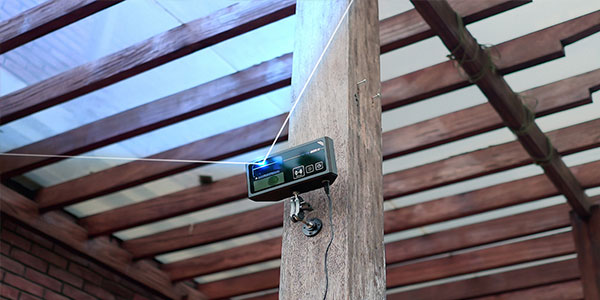
In May 2026, a highly specialized intelligent technology enterprise situated in Changzhou, Jiangsu Province—Changzhou Light Rectangle Intelligent Technology Co., Ltd.—successfully executed an overseas crowdfunding campaign heavily monitored by the global technology press, unveiling a revolutionary commercial offering designated as the "Photon Matrix". This proprietary apparatus, boasting a highly efficient eradication capacity of 30 mosquitoes per second, a functional operational radius of 6 metres, and a target recognition accuracy rate exceeding 95%, has successfully orchestrated the translation of directed-energy laser technology—previously strictly confined to the realm of laboratory research—into a mass-market, household consumer appliance. By securing a funding pool in excess of $2.5 million, thereby eclipsing its initial target by an extraordinary multiple of 125, the project garnered the financial backing of 3,657 high-net-worth early adopters, with the overwhelming majority of procurement orders originating from affluent households across North America and Western Europe. The inaugural batch of 4,000 units is slated for physical delivery in the summer of 2026, a milestone that heralds the official deployment of the world's first massively produced, civilian-grade laser mosquito eradication system, effectively transmuting a science fiction concept into a ubiquitous household appliance.
The fundamental concept of utilizing a directed-energy laser system to track in real-time and physically obliterate mosquitoes is by no means a novel theoretical breakthrough within the scientific community. In point of fact, it has languished within American research laboratories—most notably within massive intellectual property holding conglomerates and philanthropic research divisions dedicated to the eradication of malaria—for well over a decade. However, the profound commercial breakthrough represented by the Photon Matrix does not lie in the foundational invention of the laser emission mechanism itself, but rather in the entity's capacity to commercialize and mass-produce the technology via overwhelming supply chain and manufacturing superiority. The astonishing engineering efficiency of the device—capable of accurately downing 30 mosquitoes per second—and its core capability to entirely bypass the protracted development cycles and exorbitant capital costs traditionally associated with hardware development, are entirely reliant upon the deep, hyper-localized integration of its supply chain.
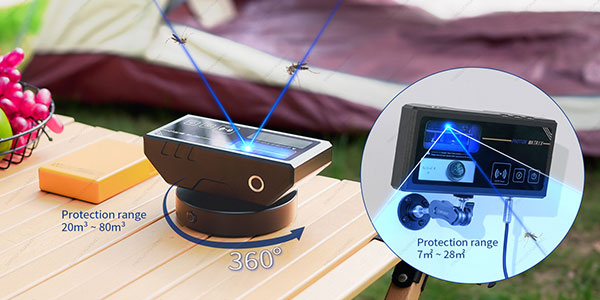
By rigorously anchoring core operations within the highly advanced, hyper-concentrated laser and precision motor manufacturing industrial cluster located in and around Changzhou, the Light Rectangle company has been able to seamlessly exploit adjacent, intensely specialized manufacturing resources. For instance, the core optical emission engine utilized by the system—although previously erroneously rumoured in market circles to be supplied by INNO LASER TECHNOLOGY CO., LTD. —actually originates from bespoke, low-power pulsed laser modules tailored specifically for mosquito eradication in the 905nm near-infrared spectrum by local Changzhou optical enterprises, such as Suzhou Xilian Optoelectronics Technology Co., Ltd. (which successfully integrated German silicon photonics firm Sicoya). Concurrently, concerning the high-precision control components, despite the fact that Shanghai Moons' Electric Co., Ltd. possesses no direct subsidiary within Changzhou, the local Changzhou motor industrial cluster—spearheaded by vanguard entities such as Changzhou Xiangming Intelligent Drive System Corporation and Jiangsu DINGS' Intelligent Control Technology Co., Ltd.—provisioned the critical, high-precision stepper motors and motion control systems essential for ensuring millisecond-level optical path tracking and micro-adjustments.
This extreme geographical proximity and seamless industrial synergy empowered the engineering teams to compress the procurement, iteration, testing, and debugging cycles of core components from a traditional timeline of several weeks into a closed-loop process capable of being finalized on the exact same day. It is precisely this regional industrial agglomeration effect that, by structurally reducing the costs of supply chain uncertainty and radically elevating the efficiency of engineering iteration, endowed the hardware with its fierce commercial competitiveness. Consequently, its actual Free On Board (FOB) manufacturing price rests between $300 and $350 (rather than the $89 figure previously circulated, which was likely the cost of a singular sub-component), ultimately substantiating the final crowdfunding retail price of $648. The intrinsic nature of this supply chain miracle is the systematic, infrastructural support provided by the Changzhou laser and micro-special motor industrial cluster to hardware innovation, which has successfully bridged the perilous chasm between laboratory theory and commercial mass production, rather than relying on the extreme, isolated advantages of individual corporate suppliers or fractured cost data.
Value Proposition Dimensions |
Traditional Pest Control Paradigm |
The Photon Matrix Dimensional-Reduction Paradigm |
Strategic Implications for Global E-commerce |
|
Consumer Recurrent Costs |
Exorbitantly High (necessitating the continuous procurement of chemical supplements and monthly subscription service levies) |
Zero (utilizing an off-grid solar power architecture, requiring absolutely no consumable materials throughout its entire lifecycle) |
Successfully orchestrates a psychological transition in consumer purchasing behaviour, pivoting from a deep resistance to low-margin recurrent expenditures towards a willingness to execute a high-margin, one-off capital expenditure. |
|
Underlying Manufacturing and Supply Chain Hubs |
Geographically hyper-fragmented, technologically rudimentary traditional chemical plants and basic plastic injection moulding facilities |
The hyper-concentrated advanced laser and precision motion control industrial cluster in Changzhou, China (exemplified by the stepper motor ecosystem adjacent to Moons' Electric) |
Establishes a temporally and financially impenetrable moat against global copycats and intellectual property arbitragers who intrinsically lack access to this specific regional, high-tier optical and precision motor supply chain. |
|
Commercial Profit Structure |
20% - 35% (severely constrained by cutthroat "red ocean" competition and punitive distribution channel commissions) |
85% and above (spanning from an absolute floor FOB manufacturing price of $89 to a premium retail markup of over $600) |
Provisions an overwhelming degree of financial leverage for the brand's Customer Acquisition Cost (CAC) on digital advertising platforms, permitting operators to comprehensively outbid and decisively crush all traditional competitors in traffic auctions. |
|
Regulatory Status and Legal Liability |
Subject to stringent Environmental Protection Agency (EPA) compliance restrictions regarding chemical toxicity and the persistent, looming threat of health-related litigation |
Secured the rigorous IEC 60825-1 international laser hardware safety certification, relying on proactive AI sensor arrays for definitive risk avoidance |
Eradicates ambiguous chemical health liabilities with transparent hardware safety certifications, precisely targeting the profound pain points of a highly environmentally conscious suburban middle class fraught with health-related anxieties. |
Strategic Implications for Global E-commerce
For operators across the global e-commerce spectrum, proprietors of Amazon FBA assets, and architects of Direct-to-Consumer (D2C) brands, the resounding crowdfunding and financing triumph of the Photon Matrix signals a profound, structural evolution in the underlying logic of the industry. The bygone era of relying exclusively upon the "White-labeling" model—capitalizing upon low technological barriers to entry and leveraging injection-moulded plastic goods to harvest cross-border retail dividends—is accelerating rapidly toward its absolute demise. The new epoch of hardware export rests upon the exceedingly precise identification of enduring, high-margin, and high-friction household demands within Western markets—such as suburban non-chemical pest control, physical perimeter security for the home, or highly localized micro-climate management—and strategically exploiting China’s mature precision manufacturing and vanguard AI supply chains to construct an impregnable technological moat fortified in both time and capital expenditure.
The Systemic Evaporation of Screens: Qwen AI Glasses S1 and the Rise of Invisible Interfaces
On May 30, 2026, the Tmall 618 shopping festival—unquestionably the most critical barometer for Chinese retail trends—officially commenced its grand opening. On the inaugural day of sales, the "Qwen AI Glasses S1," operating under the Alibaba umbrella, claimed the absolute pinnacle of the "Best-Selling Smart Glasses" chart with overwhelming supremacy, securing a commanding 30.4% market share. This represented an explosive 900% year-on-year surge, capturing a full one-third of total online sales volume within a mere 24-hour window. Simultaneously, this intense consumer frenzy swiftly transcended cultural borders, generating immense ripples across overseas social media networks: User-Generated Content (UGC) under the #QwenGlasses hashtag on the TikTok platform surged by over 12,000 new entries in a single week. Videos exhibiting highly pragmatic, high-frequency daily use cases, such as "real-time menu translation" and "live-action point-of-view navigation," achieved staggering completion rates of up to 75%, vastly outstripping the platform’s average 40% completion rate for consumer technology content (data sourced via the Social Blade analytical tool).